
November was relatively mild – I wonder if we’re in for a mild winter this year?
Just when I’d let my guard down, it’s suddenly turned much colder since last night, hasn’t it? (Brr)
The real winter is still to come!
Make sure you’re fully prepared for the cold!!
So, once again, it’s a SARTORE repair (lol)
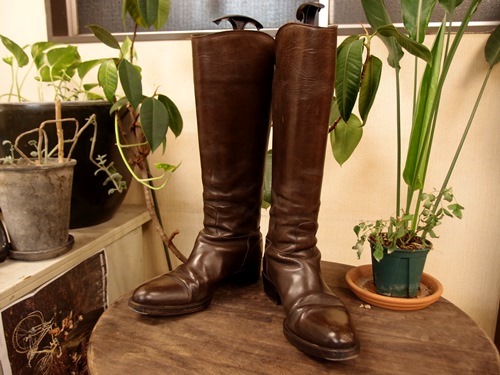
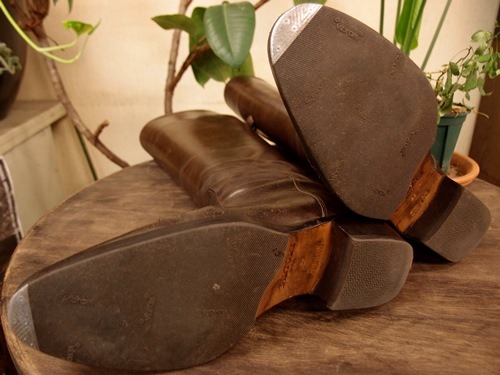
The sole is firmly reinforced with a half-rubber sole, vintage steel and a rubber heel.
However...
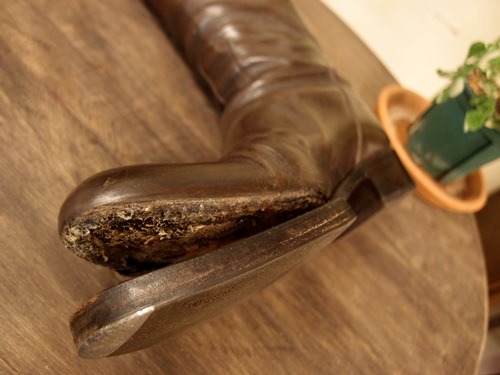
!!!!!!!!
The sole has come completely away from the base (sob)
With SARTORE shoes from this period, the soles are attached solely by gluing, so if you wear them for a long time, they can come unstuck like this.
Here’s the best way to fix this when it happens☆
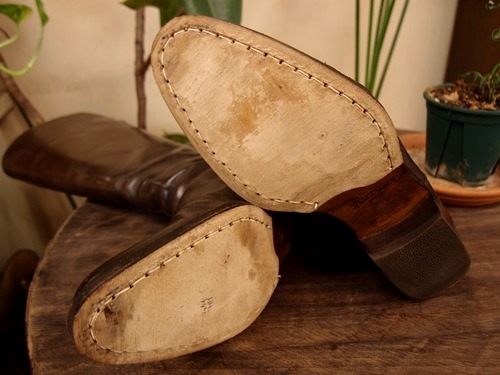
This shows the shoe with the half rubber sole and vintage steel removed, the sole glued back on, and the makke applied.
The McKay construction method involves stitching the sole to the insole (the leather lining on the inside of the shoe), which, of course, significantly increases the strength compared to a method that relies solely on adhesive☆
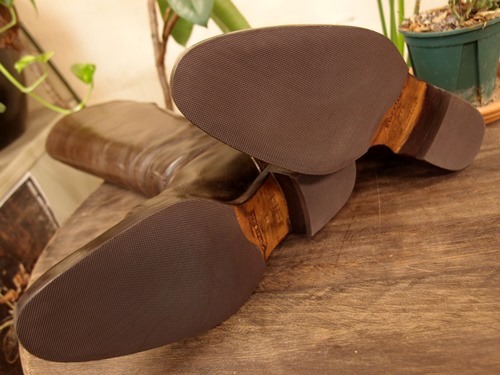
What’s more, if you fit a half rubber sole to conceal the McKay stitching, you can also prevent the thread from fraying against the ground!
This time, I also replaced the rubber heel.
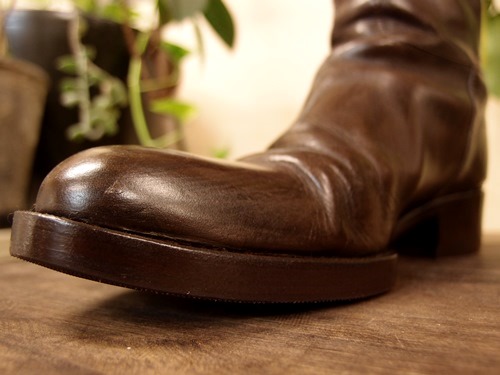
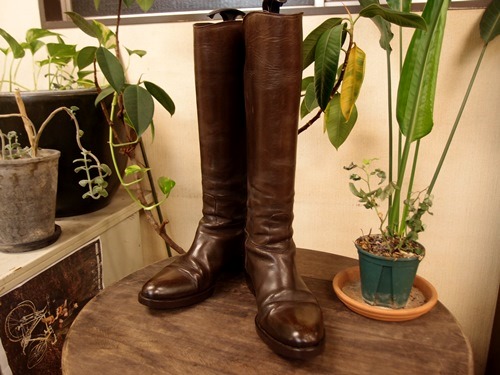
Now I can wear them with confidence☆
It’s sewn on really securely, so I don’t think it’ll come off easily★
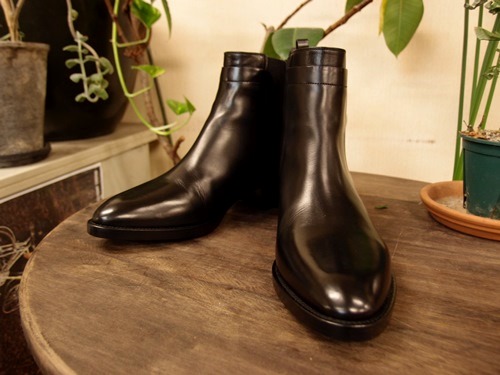
This time, I’d like to introduce another pair of shoes★
These are a rare pair of short boots from SARTORE; they’re lovely boots, featuring the lustrous sheen of high-quality leather and the beautiful shape that’s so characteristic of SARTORE☆
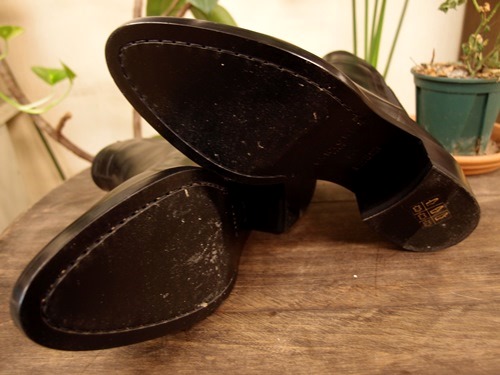
The stitching on the sole is known as ‘McKay stitching’.
Does it depend on when it was made?
It seems that some SARTORE items feature the McKay stitch whilst others do not.
I have the impression that the earlier works of Sartre are influenced by Mackay, but I don’t get that impression from his more recent works.
Of course, it’s better and more durable when it’s been treated with Mackay, but have they started using Mackay again this season?
Even if there are stitches visible on the sole, they may be decorative and not actually sewn to the insole.
If you can see stitching on the insole, it is undoubtedly a pair with a Mackay stitch.
*Please note that the insole may be hidden by the insole insert in some cases. (You can see it if you peel it off, but please do not remove the insoles from products on display in-store (laughs).)
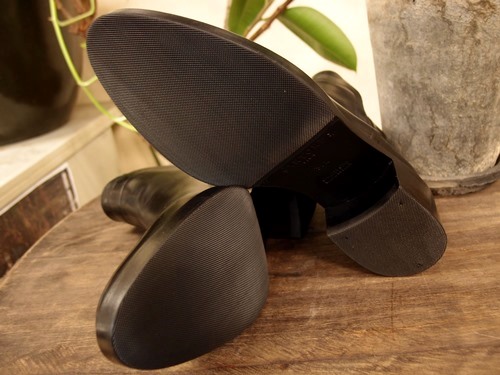
As these boots already had a Mackey sole, I simply reinforced them with a half rubber sole and a rubber heel☆
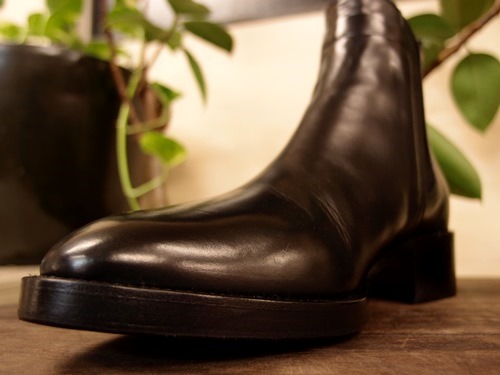
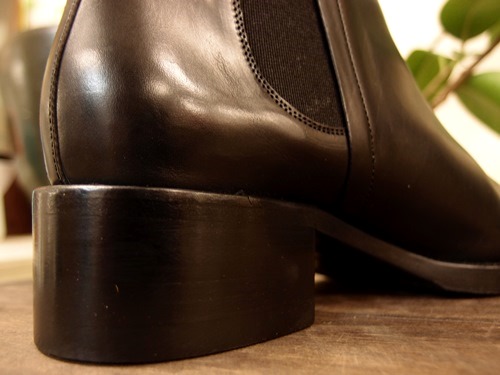
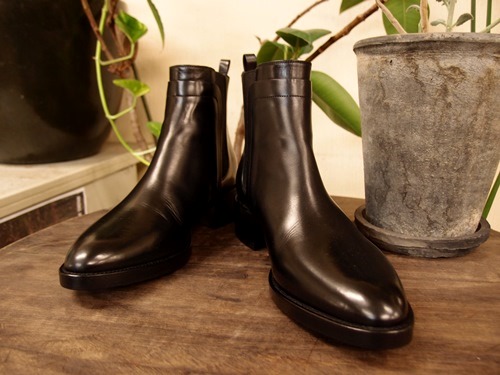
Whilst leather soles look attractive, their drawbacks are that they wear out easily and are prone to slipping.
By reinforcing them with a half rubber sole and a rubber heel, you can transform them into boots that are resistant to wear and tear, non-slip and comfortable to wear.
Do give it a go! ☆
Half rubber sole For brand-new shoes (boots): from ¥3,500
For soles that are worn down from use: from ¥4,500
McKay stitching From ¥1,500
Rubber heels: from ¥3,000 (prices vary depending on size)
*All prices are exclusive of tax.
I imagine there are many of you who are too busy to visit our shop.
We are also more than happy to accept shoes sent directly to our factory for repair.
How to Order: http://www.union-works.co.jp/contact/
Web Repair: http://unionworksrepair.com/#!/
Online Shopping: https://unionworks.stores.jp/#!/
(Morita, Factory)