
This time, rather than focusing on shoe reviews or repair examples,
I thought I’d post a little anecdotal piece.
‘Peel facing’, which I touched on briefly when I previously introduced Peel shoes,
Today, I thought I’d write about what is commonly known as the swan-neck stitch.
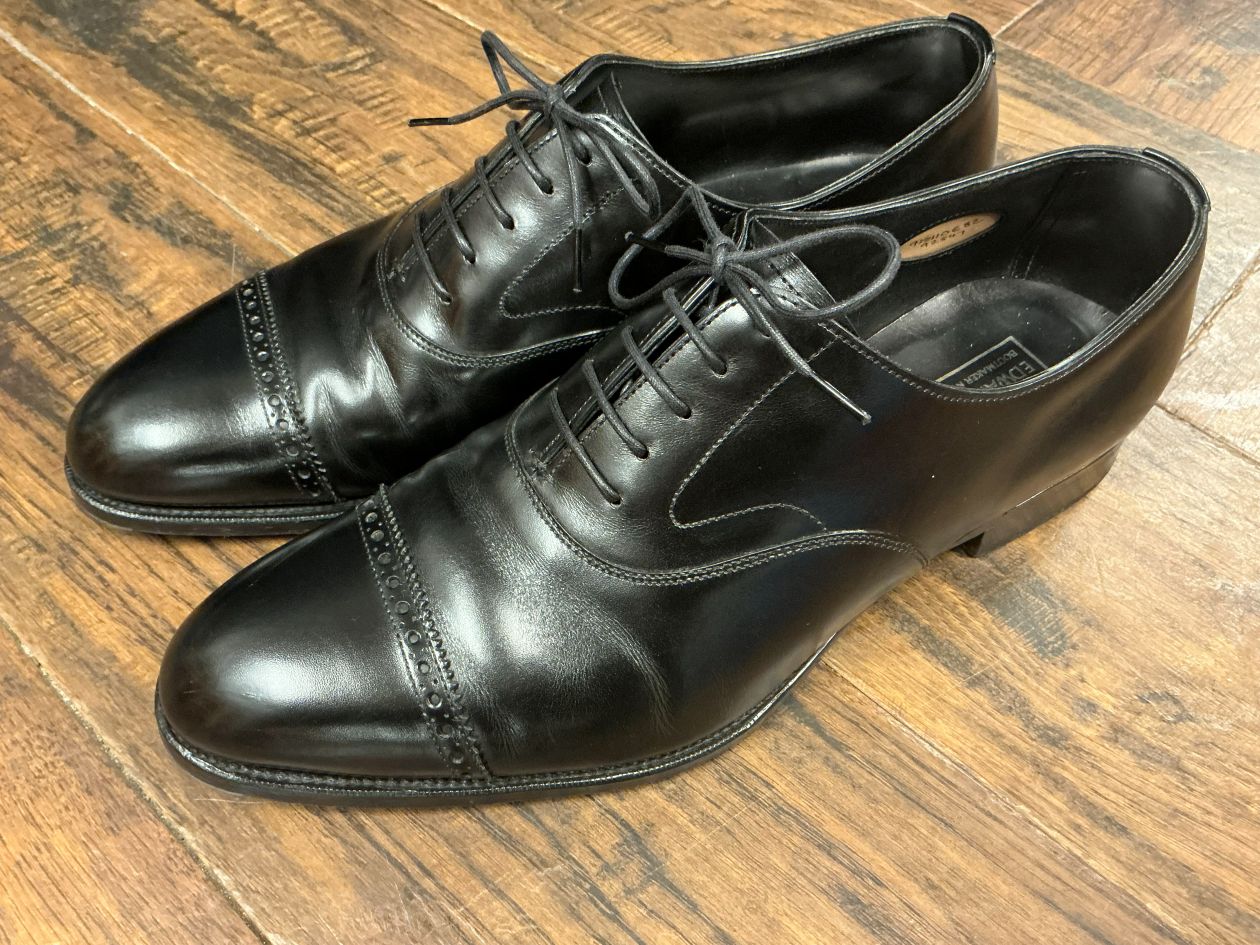
A swan-neck stitch is the stitch found alongside the shoelace,
This is the widely recognised name for a stitch that resembles the character ‘ku’.
Although this detail can be found on various types of shoes,
I imagine many people associate the swan-neck design with Edward Green.
However, Edward Green’s shoes did not feature the swan-neck stitch from the outset.
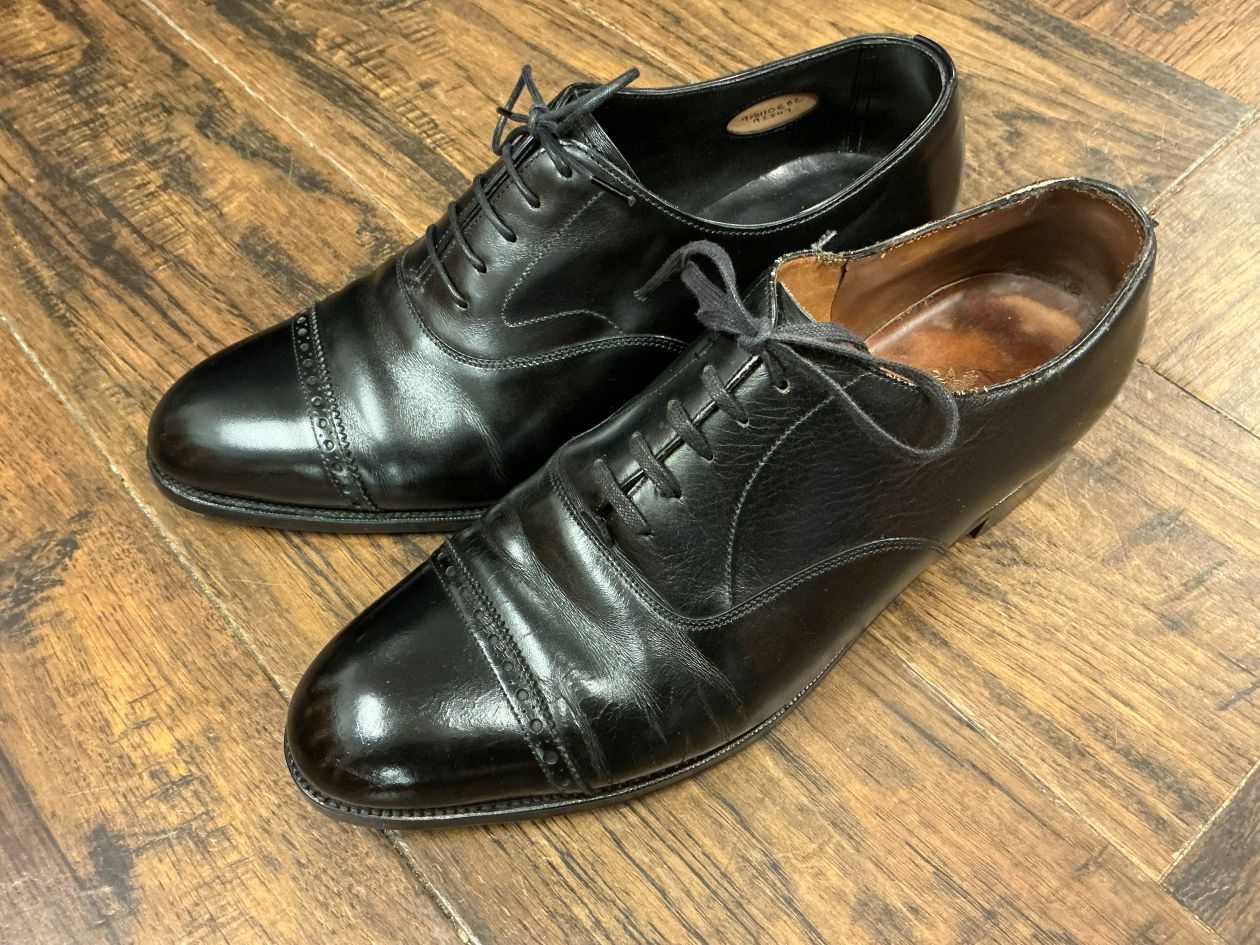
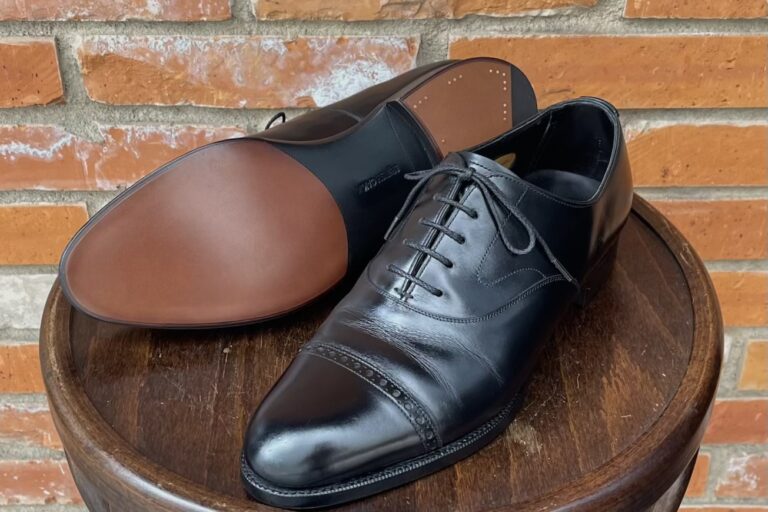
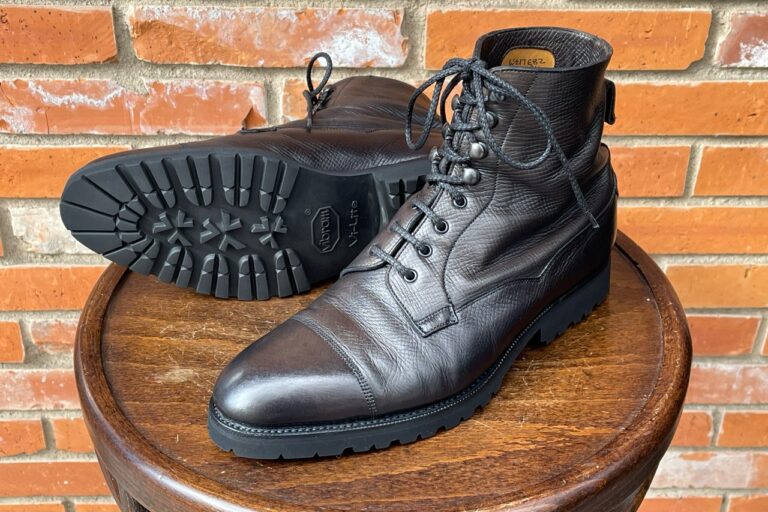
In the image above, the item in the foreground is on display at the Shibuya branch as a repair sample, but,
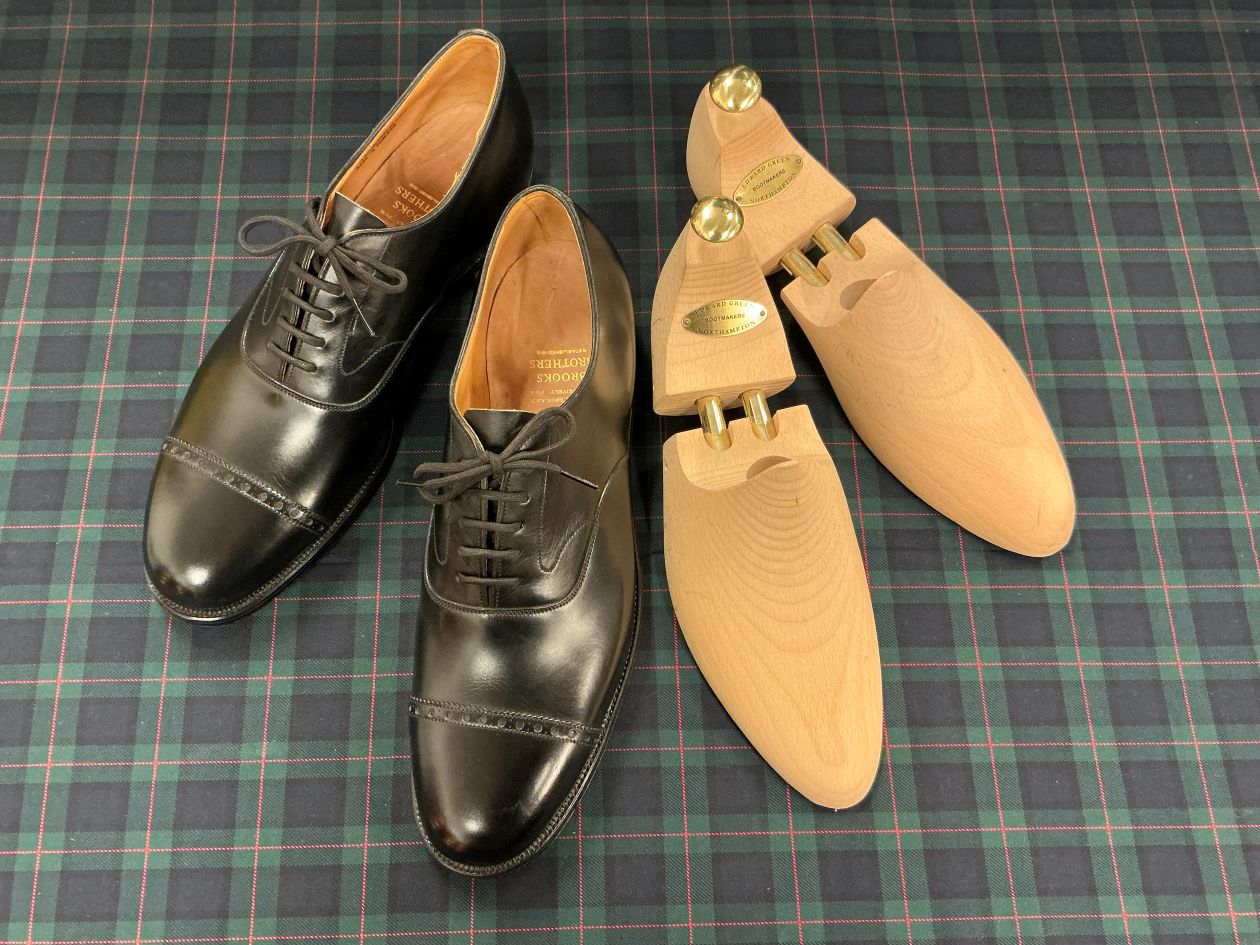
These are a slightly older pair of Edward Green shoes. At that time, they did not feature the swan-neck stitching.
So, when did this detail first start to be used?
As those in the know may be aware,
At the time referred to as the ‘old factory production’ era, it did not yet have a swan-neck design,
I imagine that is the general perception.
In that case, I wonder how long the ‘old factory’ remained in operation, and when it became the ‘new factory’…
Let’s take a look at that point.
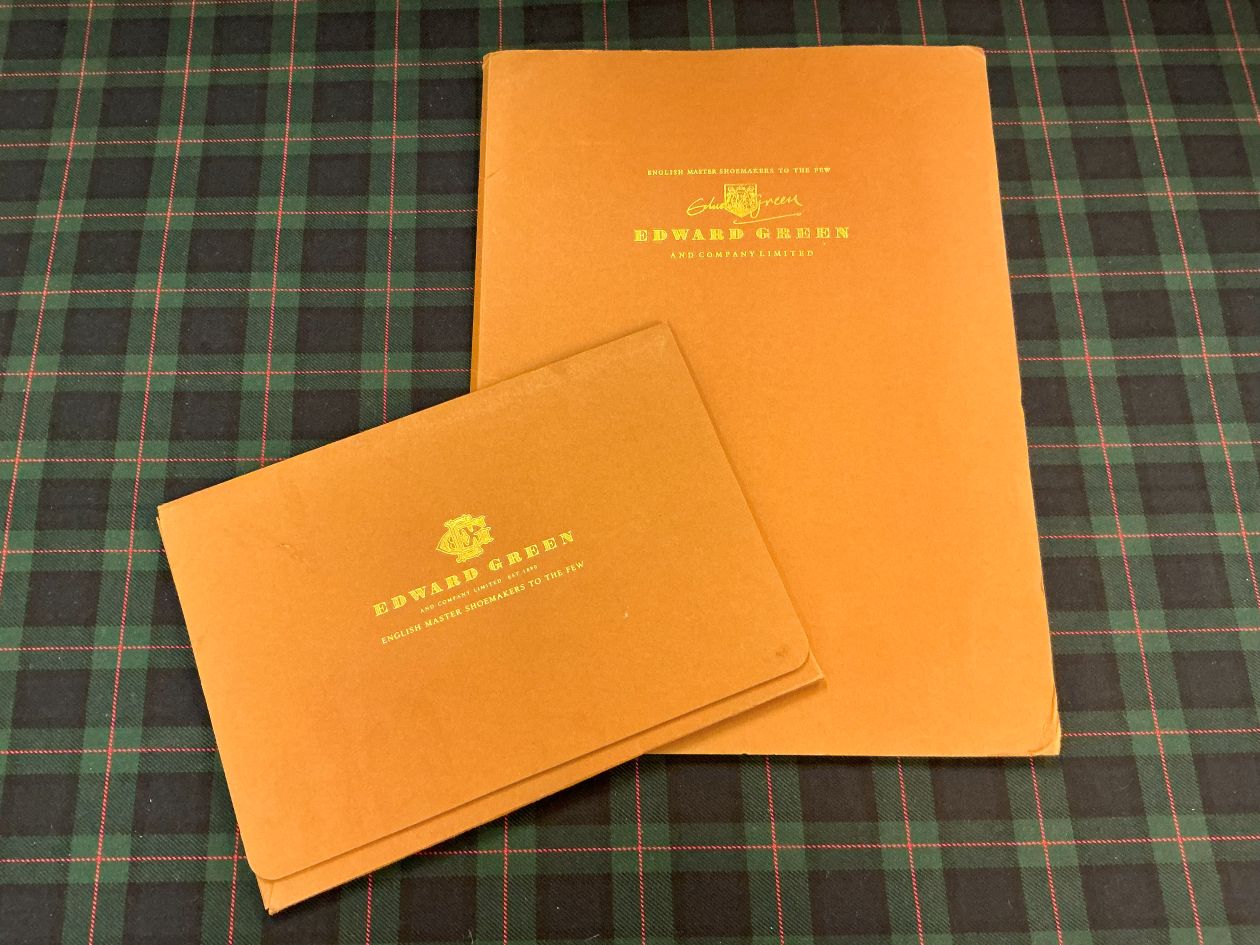
I happen to have this document to hand, and I found some interesting information in it.
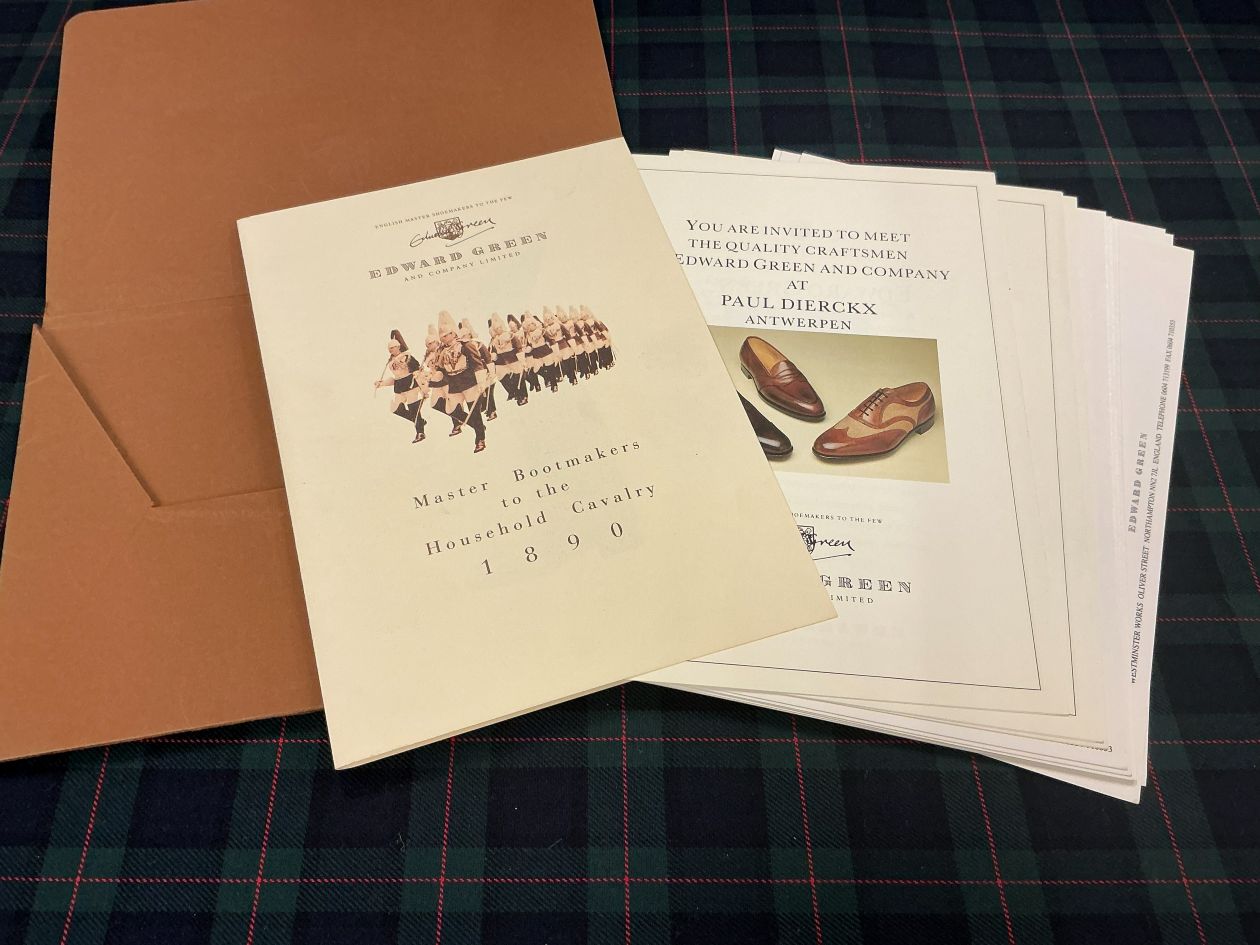
The contents are essentially a catalogue from that period.
I believe it’s a shop in Antwerp, and it seems to have been made specifically for that shop.
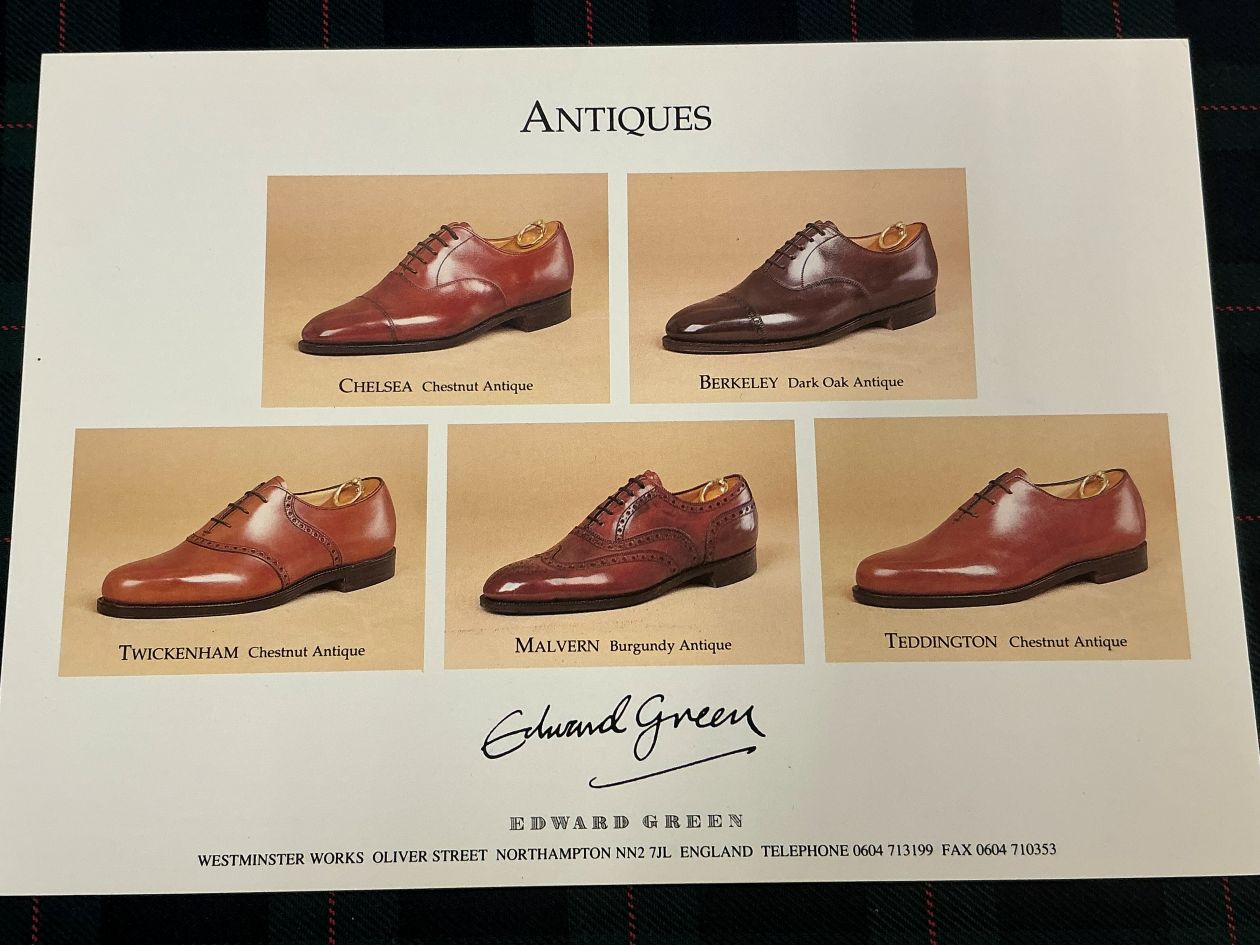
There are several pages like this, organised by category, but,
This category includes models such as Chelsea and Barclay.
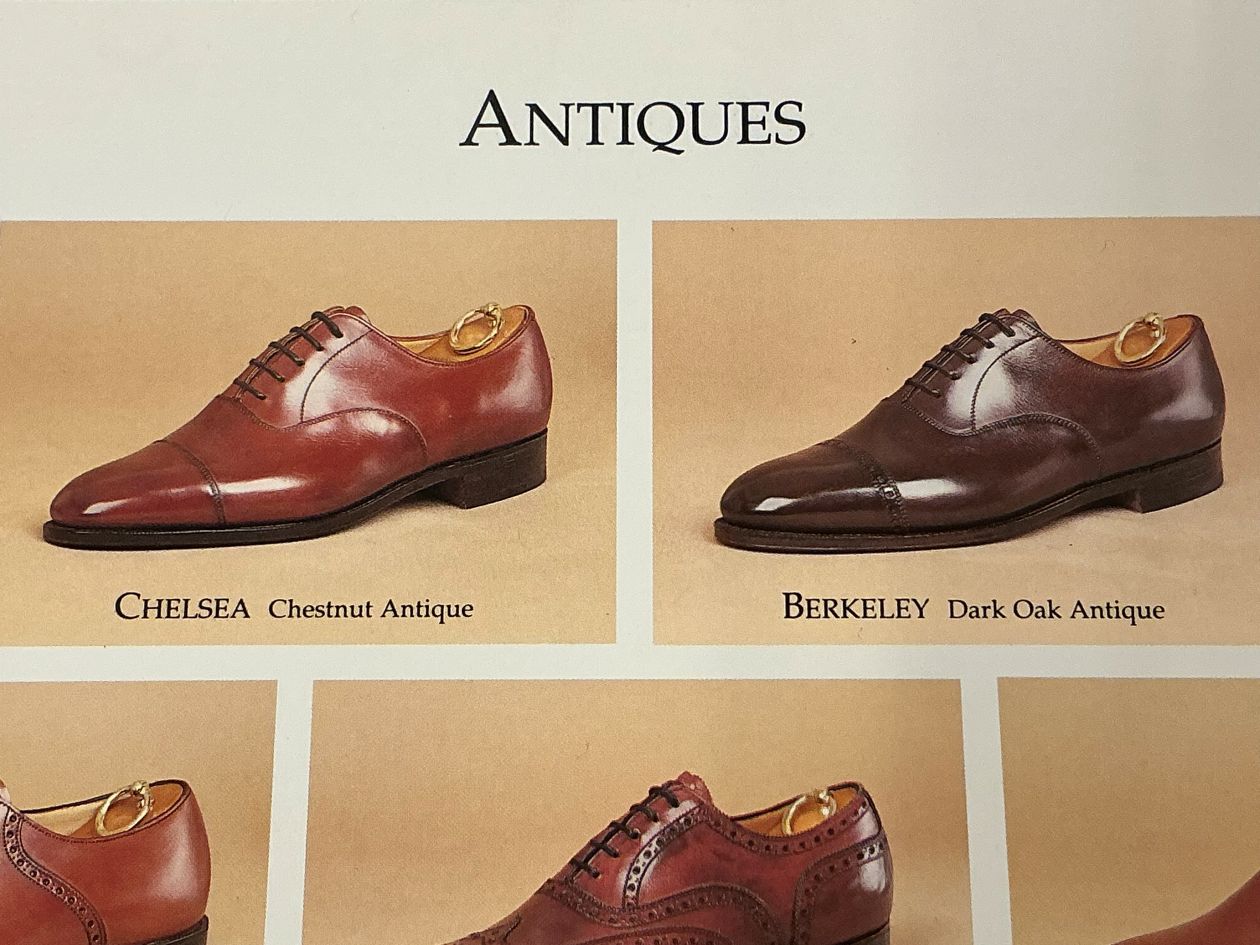
This page features items that are not yet swan-neck designs.
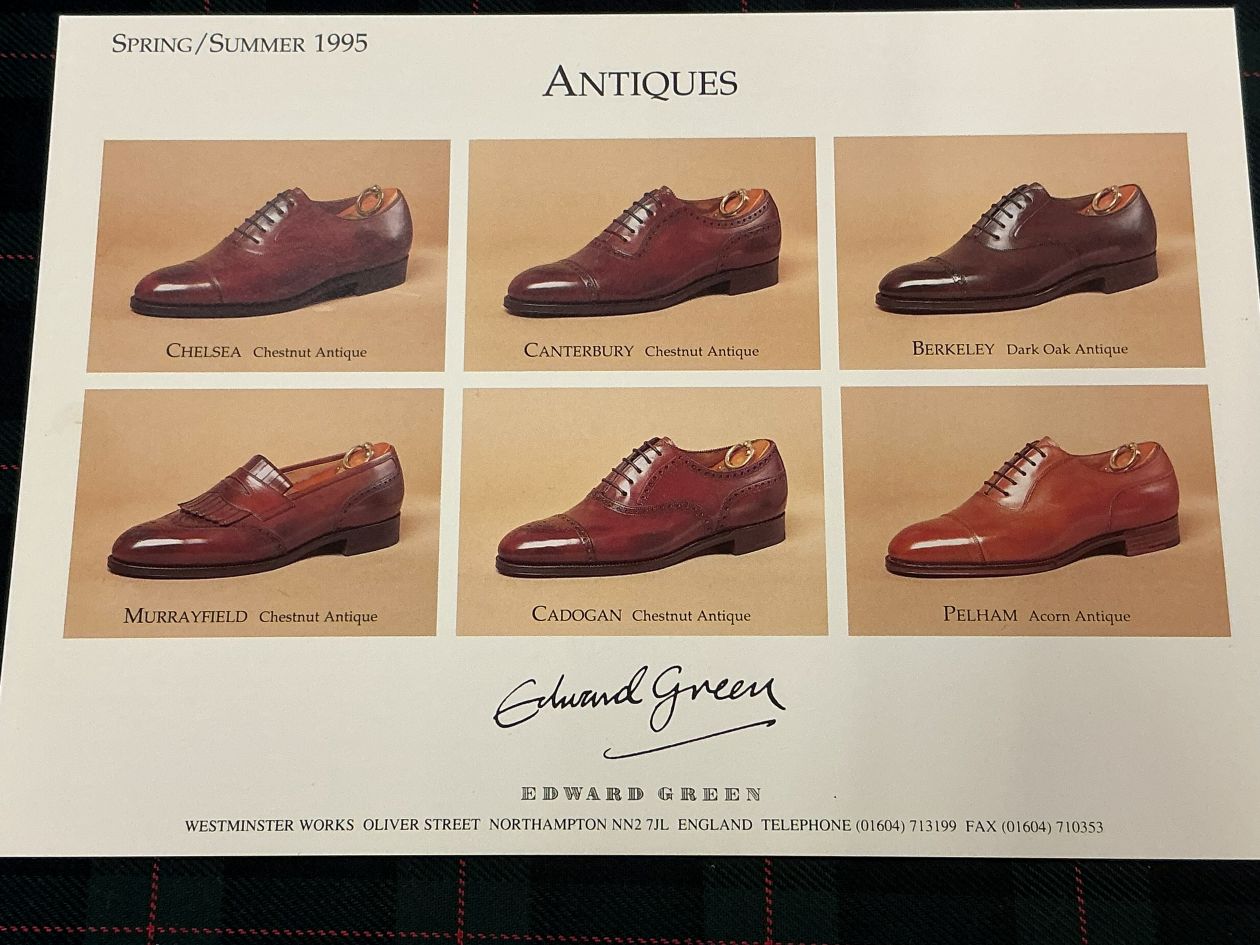
On this page, you can see when the swan-neck design first began to be used.
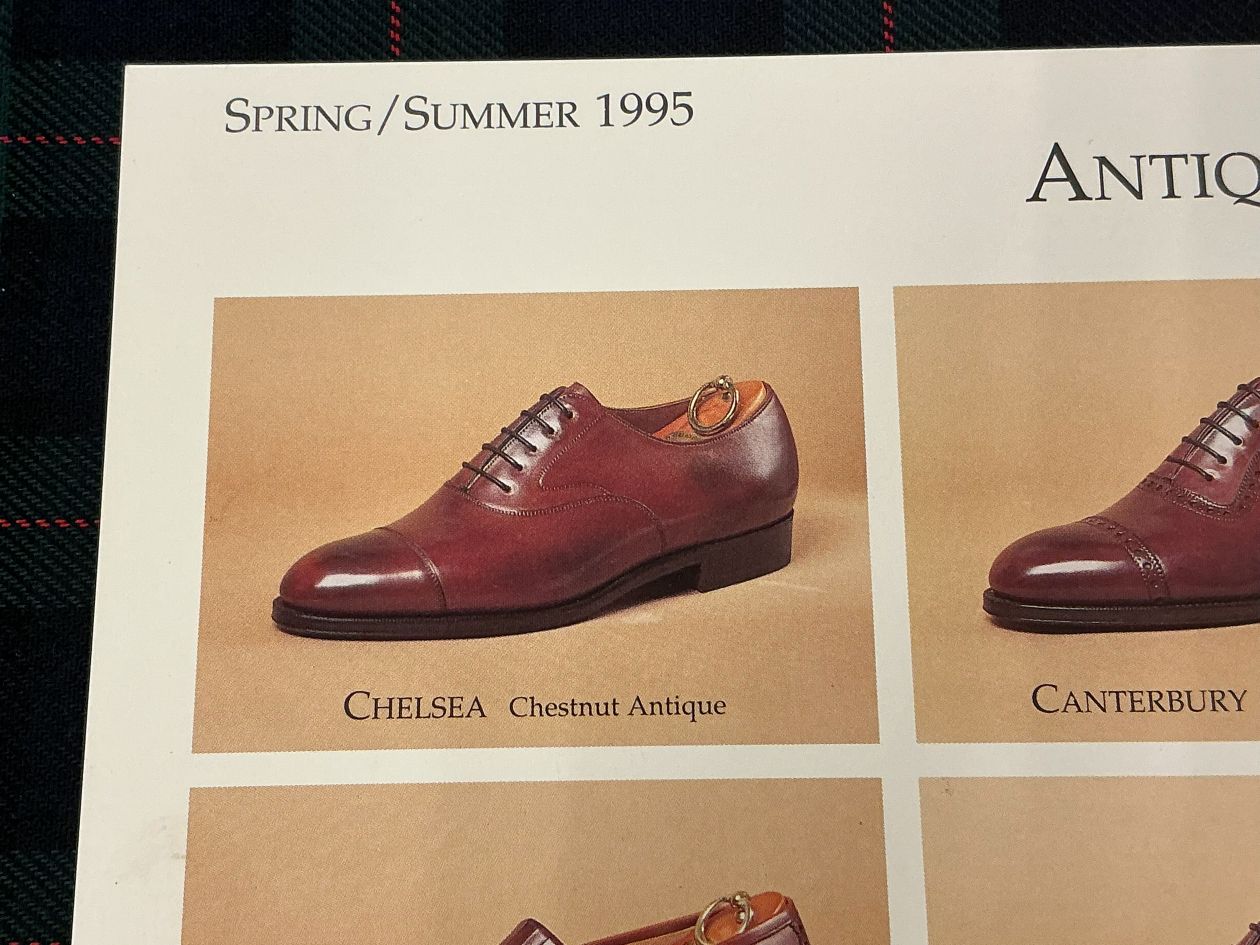
It is labelled ‘Spring/Summer 1995’, and
The photograph shows a Chelsea model featuring a swan-neck design.
I believe this is a new collection launching for the Spring/Summer 1995 season, but,
It seems that the ‘swan neck’ began at this point.
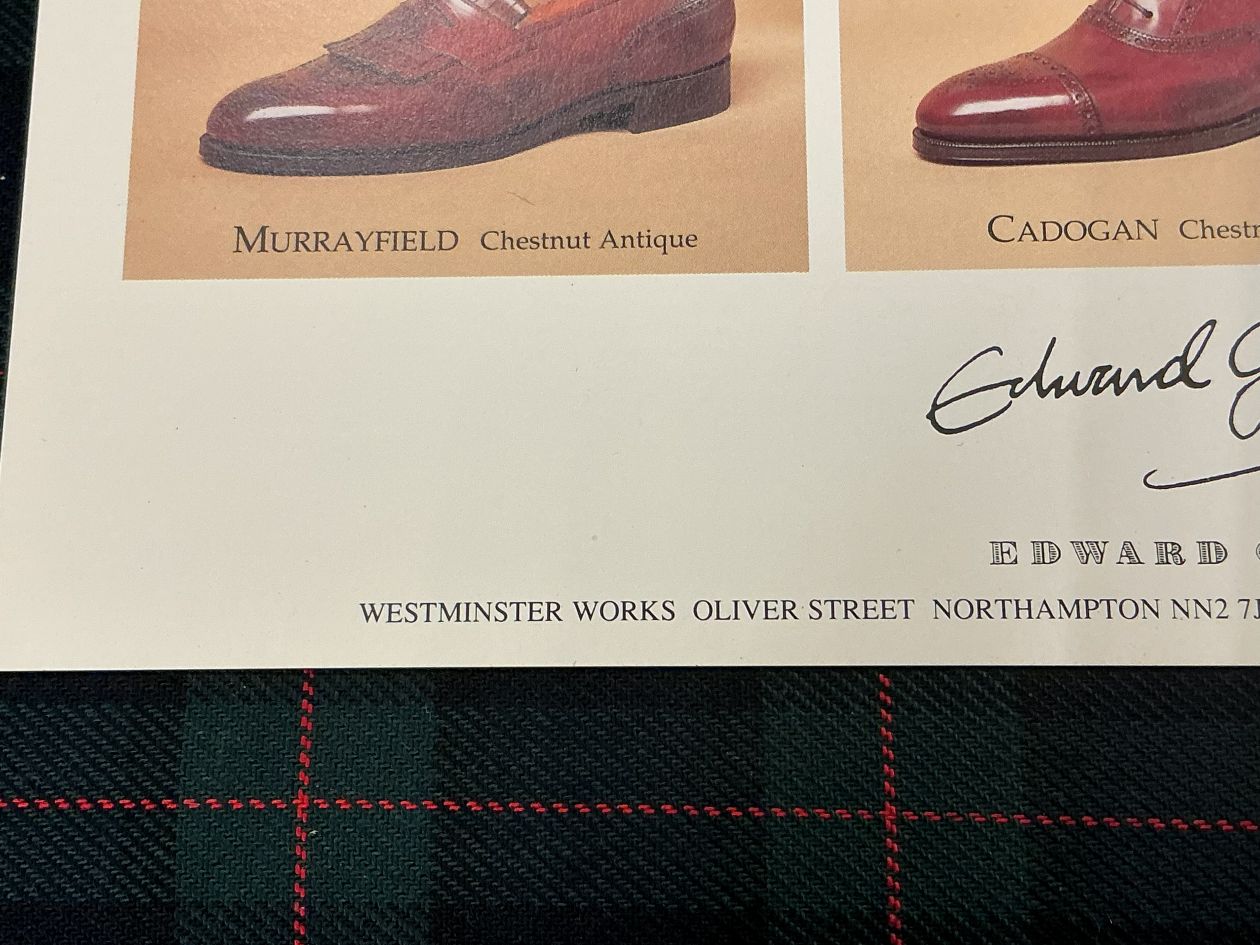
Furthermore, the name and location of the factory at that time are listed, but,
It is known as Westminster Works and is located on Oliver Street in Northampton.
That is the place known as the ‘old factory’.
It seems they hadn’t moved yet at that time.
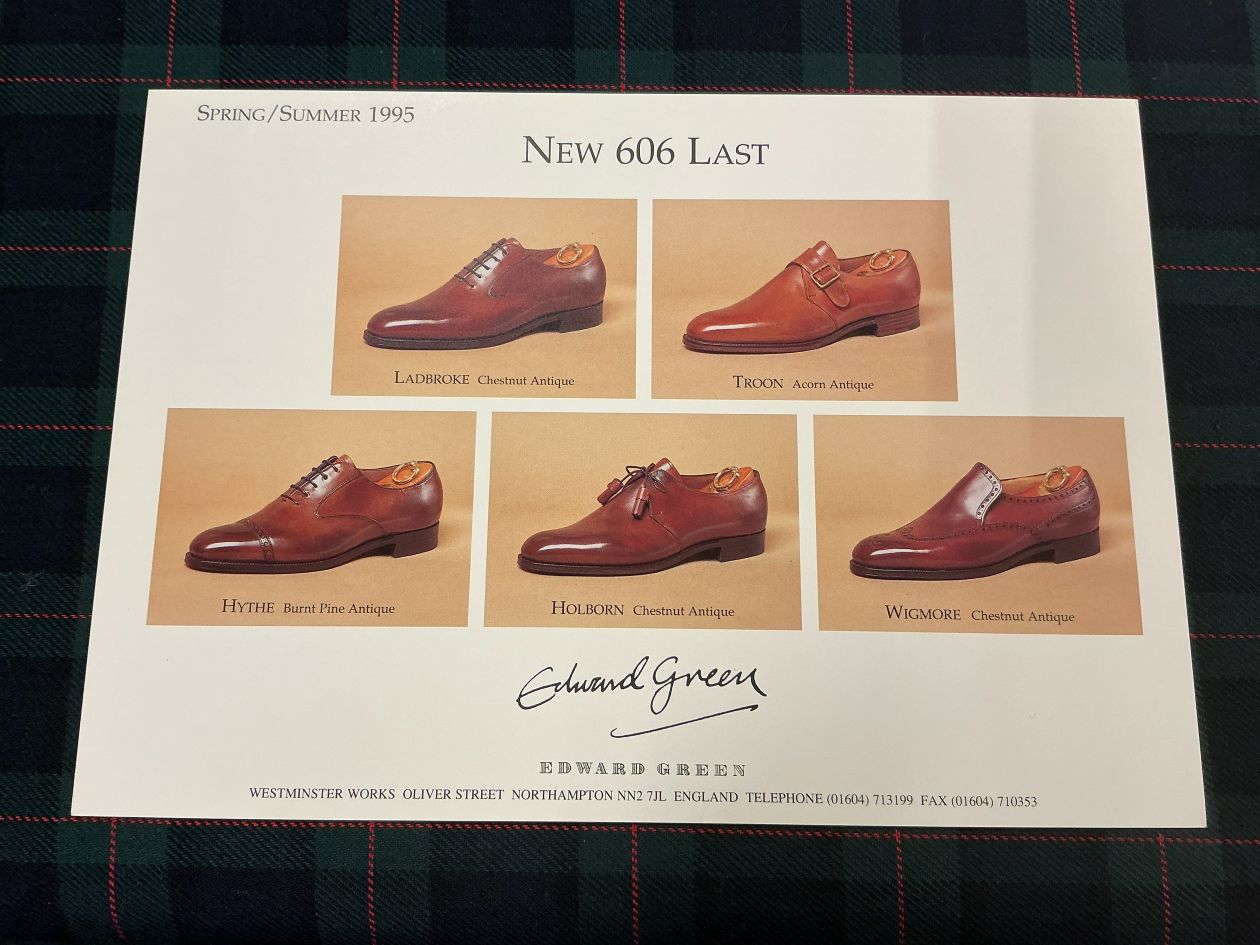
Incidentally, it seems that ‘606 Last’ also began around this time.
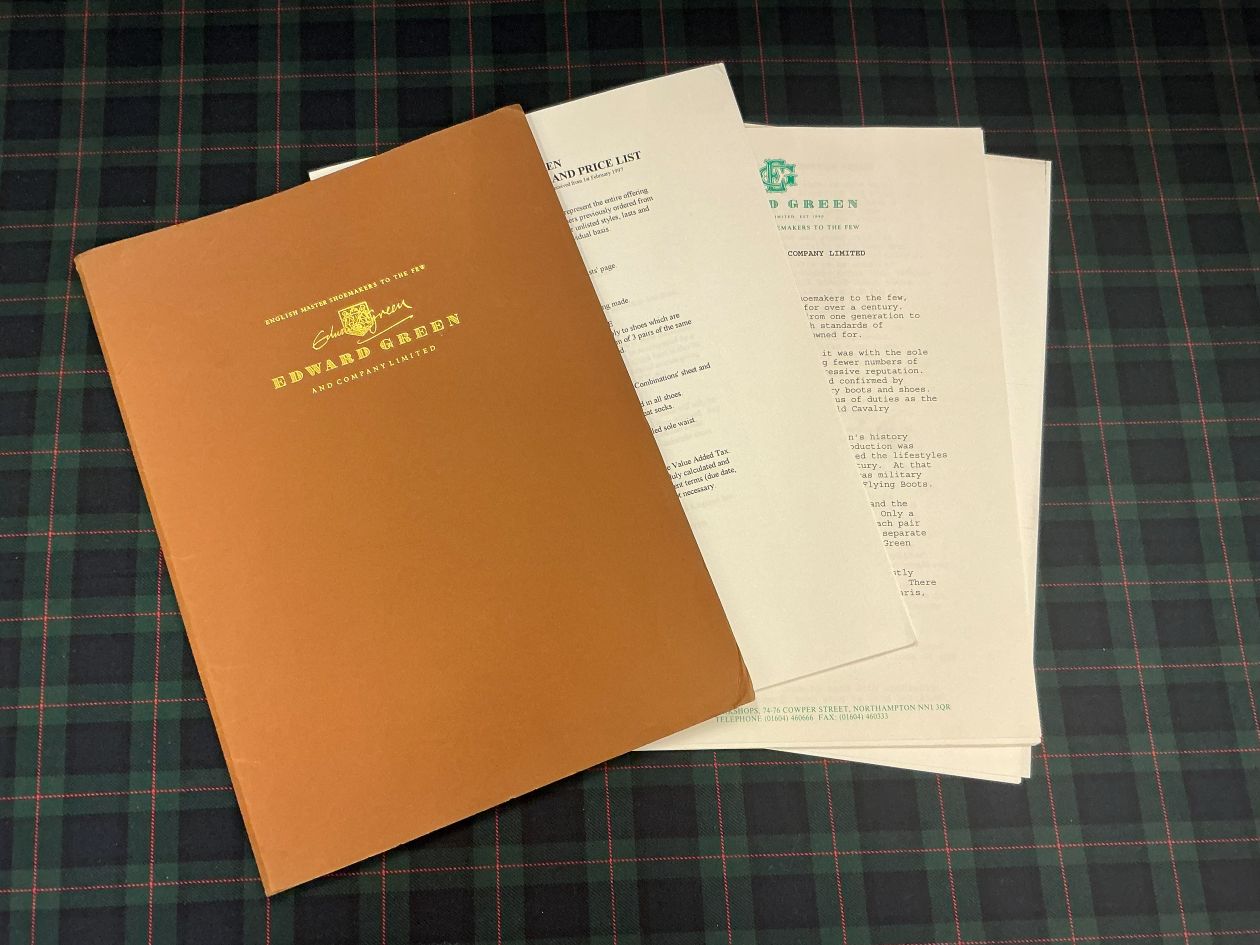
Next, I have the following document, but,
You can get a rough idea of when the move to the new factory will take place here.
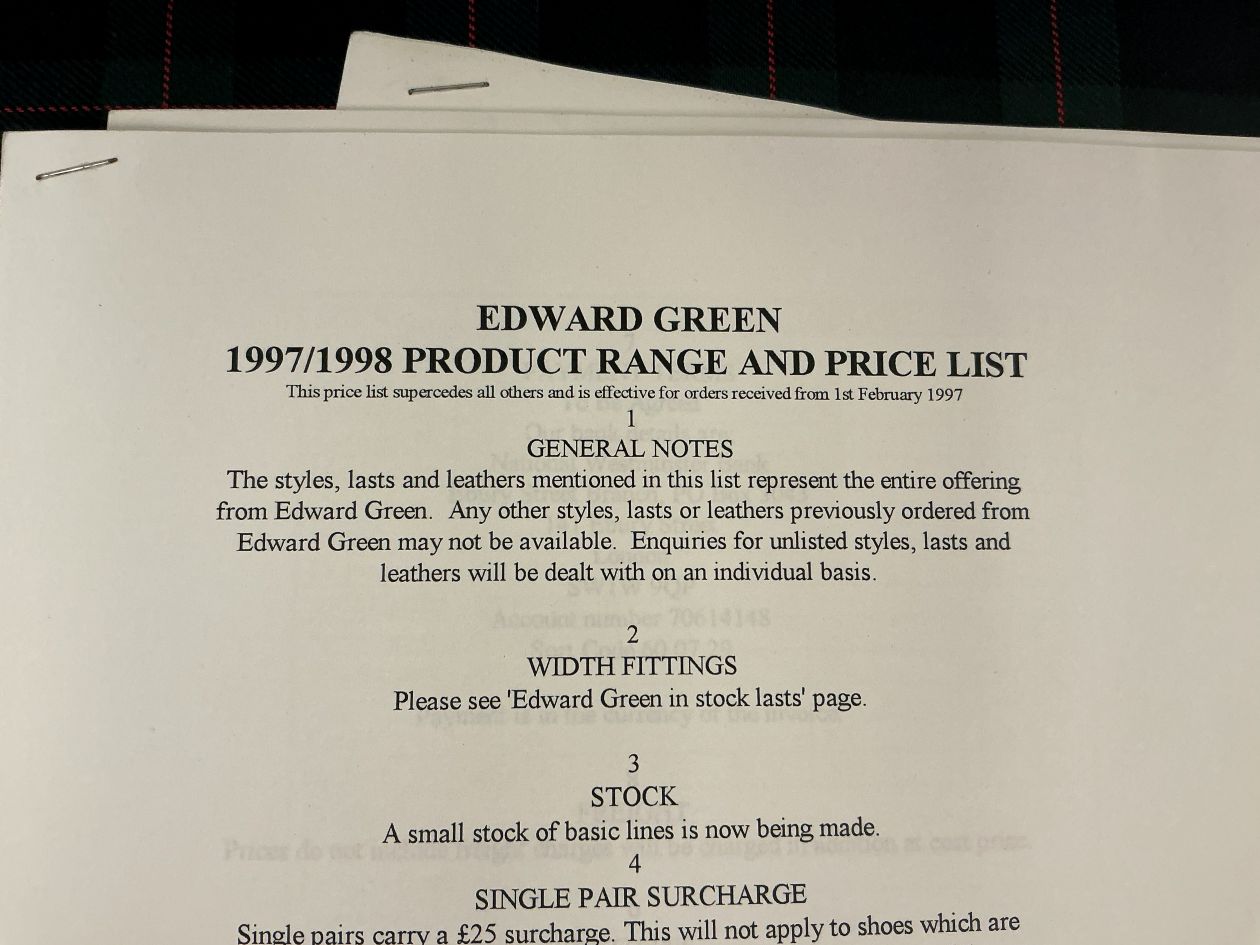
This appears to be documentation for the 1997/1998 academic year.
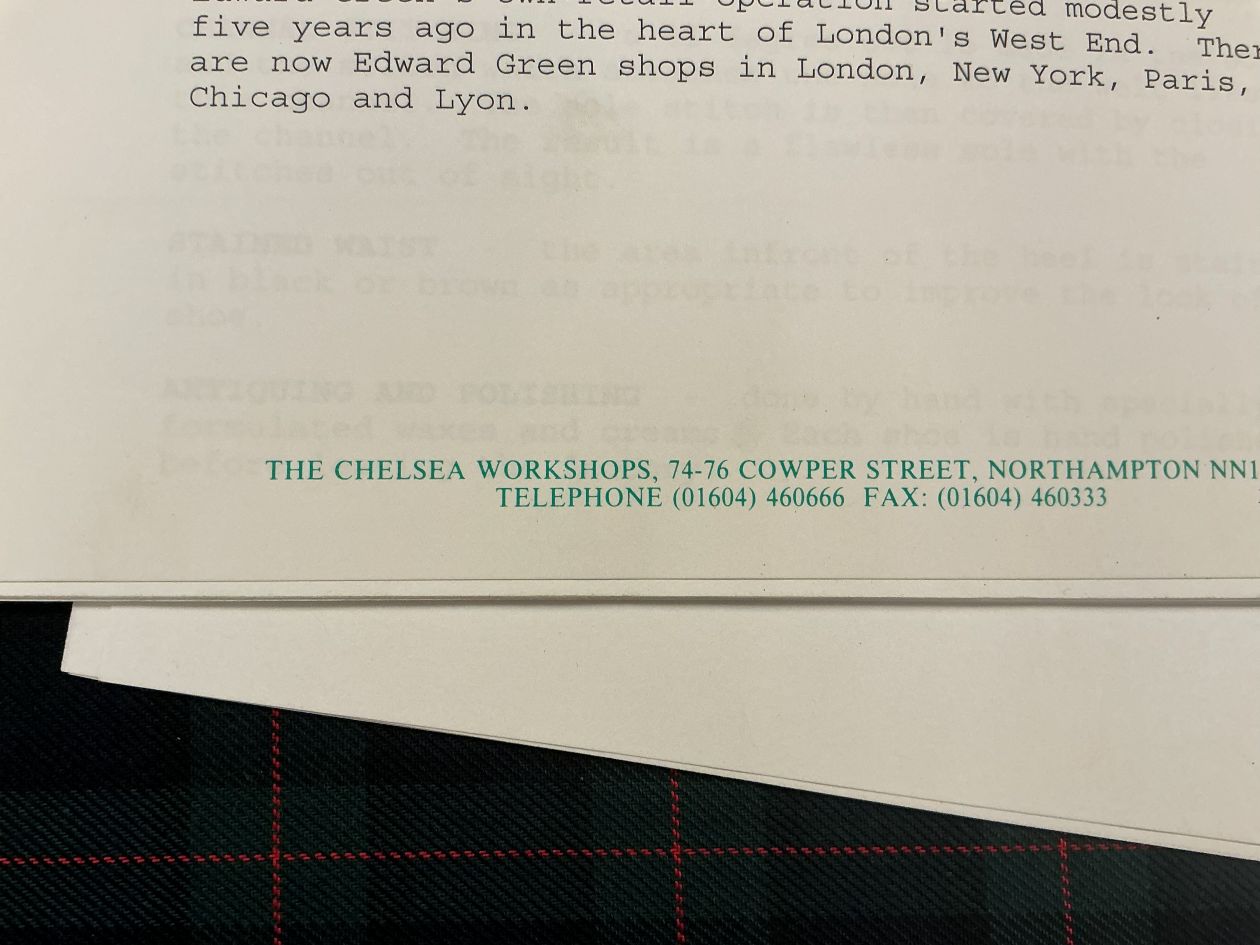
By this time, the factory name and location had changed.
This means that they moved to the new factory between 1995 and 1997 at the latest,
I learnt this from here.
Documents like these are now quite rare, and they are extremely useful for this sort of research.
This time, I’ve focused on the swan-neck stitch, but,
There were also details of the ‘Last’ range and product descriptions from that period, making for a very interesting read.
These materials are also available at our Shibuya branch, so please do feel free to ask if you are interested.
The Shibuya branch will be open this Saturday and Sunday from 11:00 to 19:00.
This article offered a slightly different perspective from usual.
Thank you for watching until the end.
Hanada