
EDWARD GREEN: Resole to Old Style
EDWARD GREEN: Resole to Old Style
4 March 2021
- CATEGORY
- Edward Green
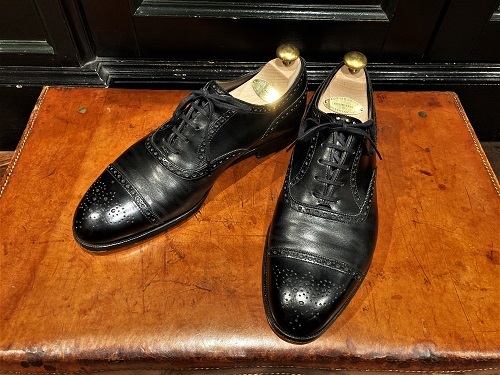
Today, I’ll be discussing the process of replacing the soles on Edward Green shoes.
The request this time is for an ‘old-style’ design.
This involves completing the work in accordance with the specifications that were in place before the current ones came into effect.
The client is a regular customer.
To explain the background: I ordered a pair of shoes in the ‘Old’ style, but they could only accept my order for the upper pattern,
I’m told that the finish on the sole will be the same as on the current model, and,
‘Right, then, once I’ve worn out the original soles, I’ll ask Union to fit them with the old-style soles.’
That’s the background to what you’ve brought in this time.
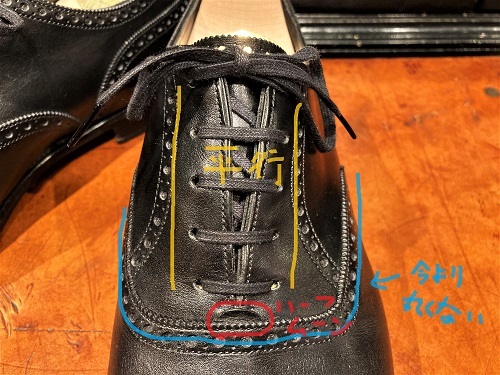
What exactly is the ‘Old’ upper pattern, anyway?
I hope the image above conveys this point, but,
・The section marked by the blue line is squarer than it is now
・The holes for threading the laces (eyelets) are arranged in parallel (the current ones are in a ‘V’ shape)
・Comes with a half-moon (though some older models may or may not have one)
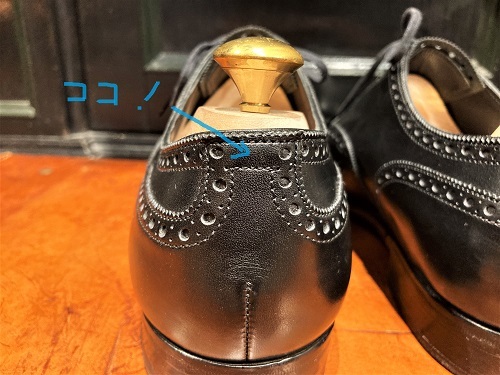
On the back, there is a horizontal stitch where the arrow points, so that the shape resembles a ‘Π’ rather than a ‘人’.
(Although some of these are also classified as ‘people’ in the ‘Old’ category.)
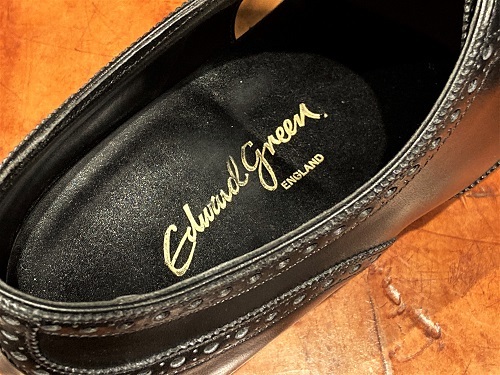
Next up is the lining.
Strictly speaking, the lining should be off-white rather than black, and there are no ‘windows’, but,
It seems it wasn’t possible to reproduce this design either; apparently, only the Sock Sheet logo in cursive was available.
I’ve briefly listed the differences from the current model, but next we’ll finally move on to the main topic: the sole.
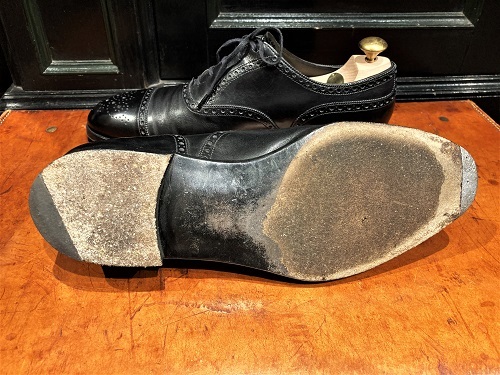
Here’s what it looked like before the repair.
These are the specifications for the current model.
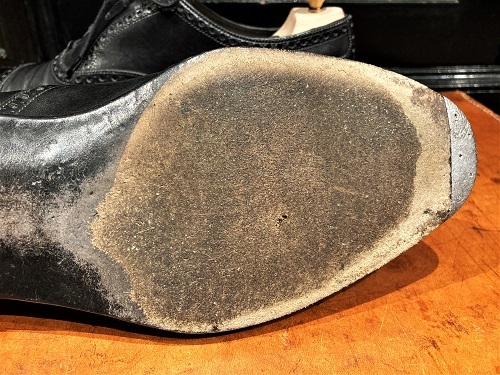
You brought it in just before a hole appeared, but,
In terms of specifications, the current model features a semi-matte finish.
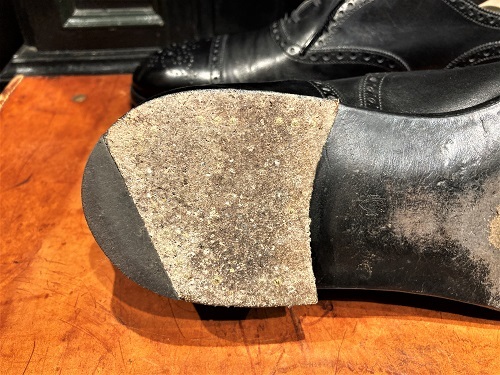
The top piece of the heel is a crescent-shaped quarter-rubber type.
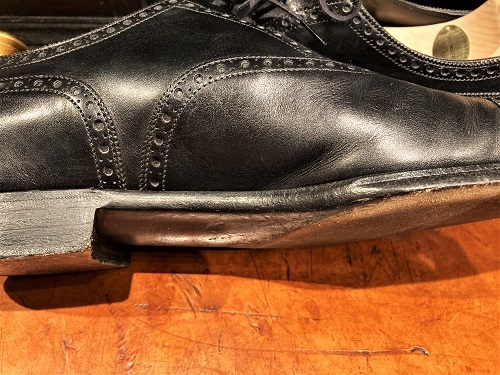
A hem with a rounded finish at the waist.
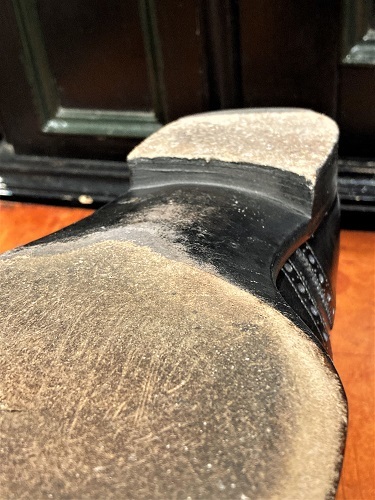
A waistline shaped into a curve by placing the inner lining on top of the shank.
The current Oxford model has the following specifications.
This time, we’re going to give it an old-style look!
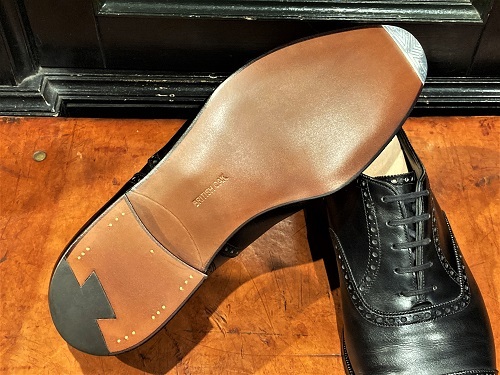
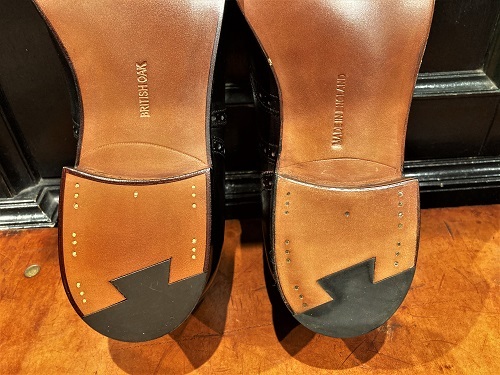
Here is the finished result.
An old-style design with a simple finish.
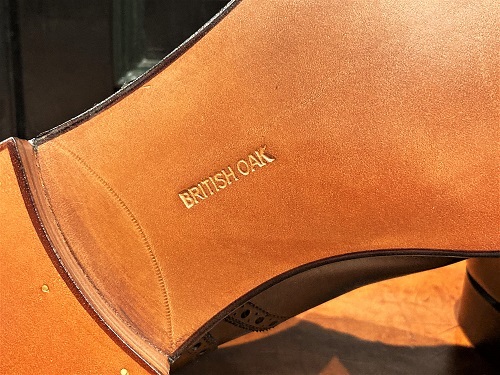
The waist features a single-colour finish with no half-collar.
As the sole was upgraded to an oak sole, it has been stamped.
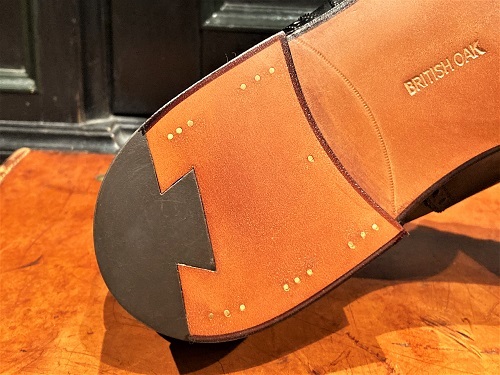
The top piece of the heel is a traditional dovetail joint.
Of course, the nails are driven in three at a time.
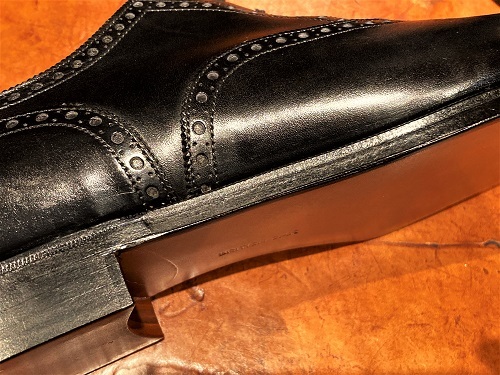
The edges are all flat all the way round.
I won’t make the waist rounded.
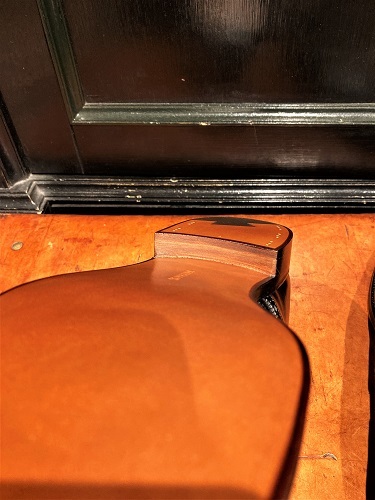
The waist padding will be removed, giving the ‘Old’ style a flat finish.
Although the ‘Old’ style has a simple finish, I think it has a charm of its own that is distinct from anything too flashy.
Precisely because the design is simple, it is important to take great care with the finish of each individual piece,
I believe it is essential to pay attention to the finer details of the specifications.
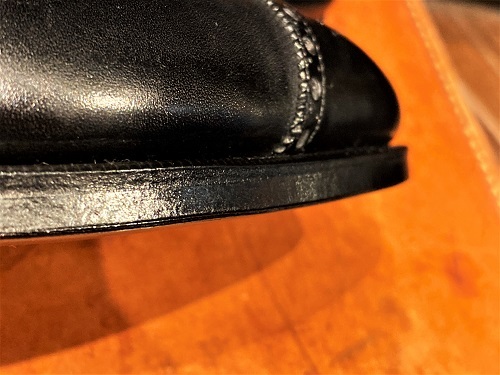
Finishing the edges, and,
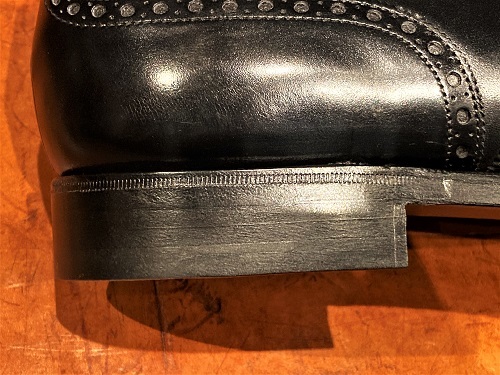
And the finishing touches on the heels, too.
There are various factors that contribute to that authentic feel.
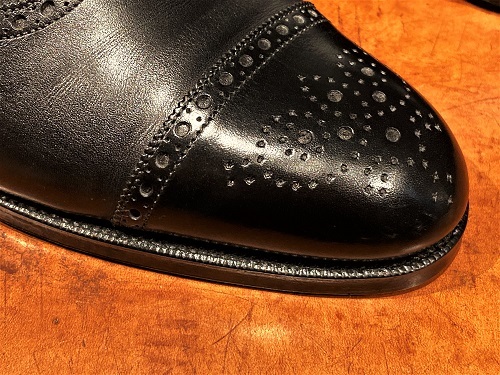
If you also replace the wheel on the welt to give it a bit more definition,
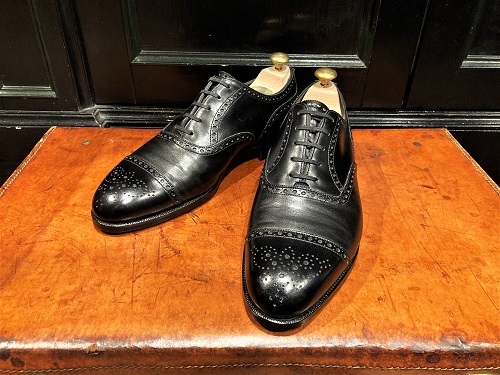
I’ve taken another step towards an old-style EG.
It’s the sole, so you wouldn’t notice once you’ve put them on, though lol
It’s all about personal satisfaction – isn’t that actually quite important?
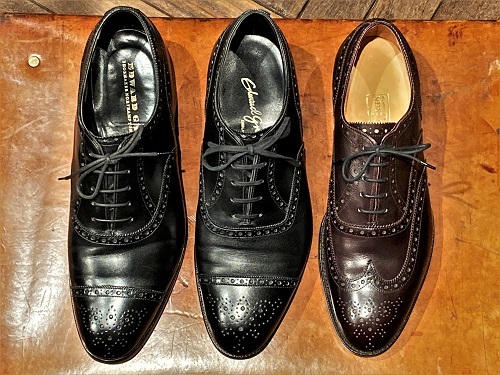
Since the topic of the current model and the older one has come up, here’s a quick comparison whilst I’m at it.
I happened to have something to compare it with to hand, so I’ve laid them out side by side.
The left one is one size larger, but they are all 202 / D.
Left: Current (recent) Kadogan 202/9/D
Among these, the Kadogan 202/8/D from this Old Style Order
On the right, a Malvern 202/8/D manufactured at the old factory
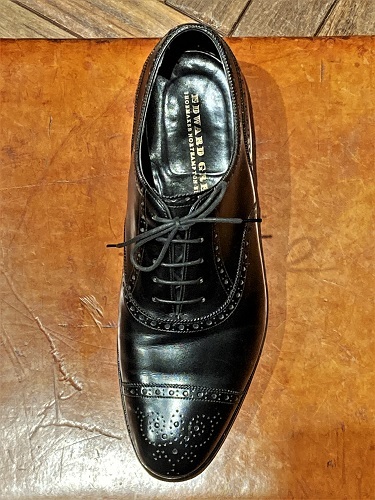
Current Kadogan 202 / 9 /D
This is from when the sock sheet was the previous model.
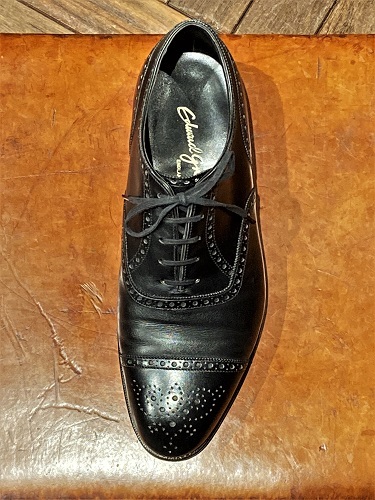
The 202/8 D, an ‘Old Style’ made-to-order item featured here,
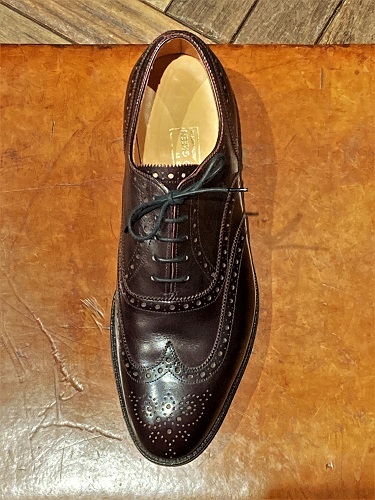
Malvern 202/8/D, manufactured at the old factory
‘Why is it that even when the last, size and width are the same, they somehow look different?’ or,
‘What is it about this difference in atmosphere that’s so hard to put into words?’ or,
Even if they seem similar, there are often subtle differences, and it’s interesting to compare them.
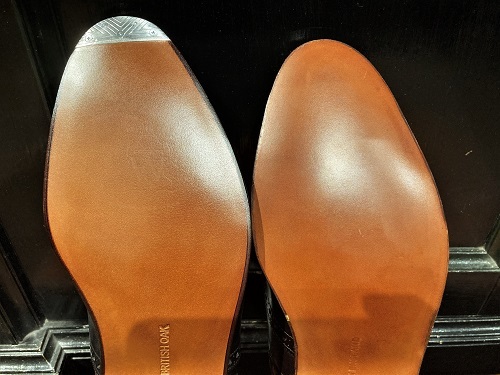
Since we’ve gone to the trouble, here’s the one we’ve finished in this vintage style, and
Let’s compare some old deadstock items.
We’ll adjust the colour of the sole finish to give it an Edward Green-style look.
Finishing the heels.
On the left is our finish; on the right is the original Edward Green finish.
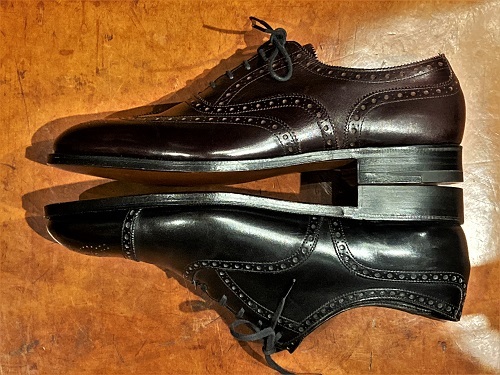
The top one is old deadstock; the bottom one is an old finished item.
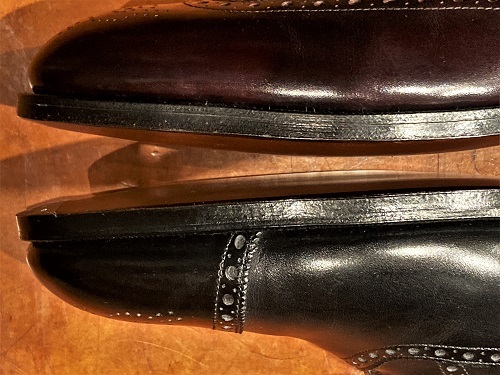
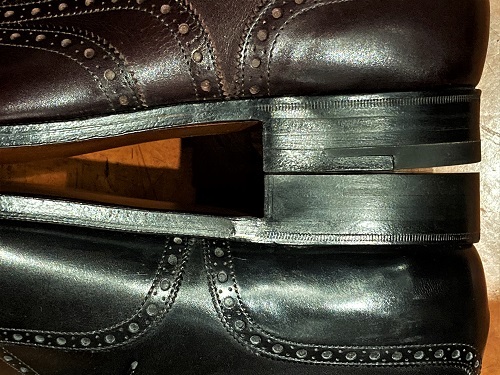
I think we’ve managed to get it to the point where it feels quite authentic.
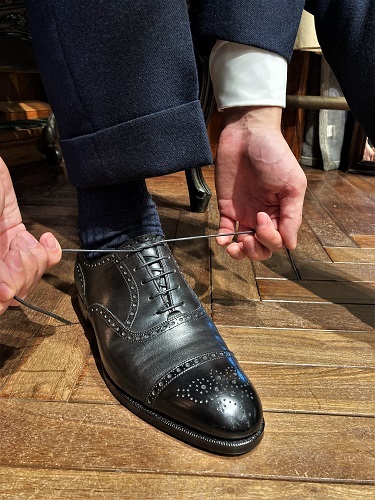
We have therefore successfully delivered the finished product.
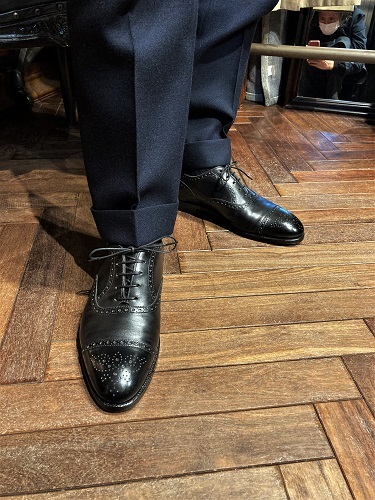
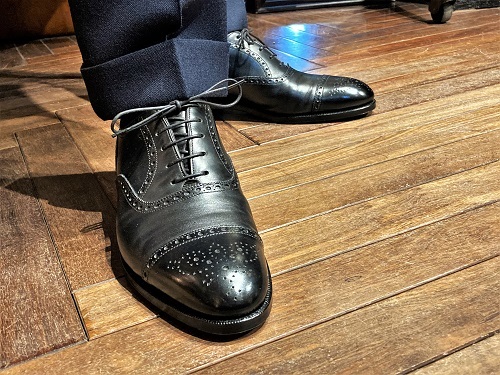
I hope this will make you like this pair of shoes even more.
As we’ve shown you here, you can do things like this, so,
Please do not hesitate to let us know if you have any requests regarding the repair.
Wherever possible, we aim to accommodate your requests as far as we can.
I think the time spent mulling over the specifications, going back and forth between different ideas, is actually quite enjoyable.
Conversely, if you’re not quite sure, please leave it to us and we’ll be happy to make a suggestion.
Please do feel free to discuss any matters with us.
Details of the repairs carried out on this occasion
・Full Sole Replacement (Plan A) ¥22,000 + VAT
・Oak Sole ¥3,000 + VAT
・Vintage Steel ¥4,000 + VAT
Shinjuku Branch Hanada