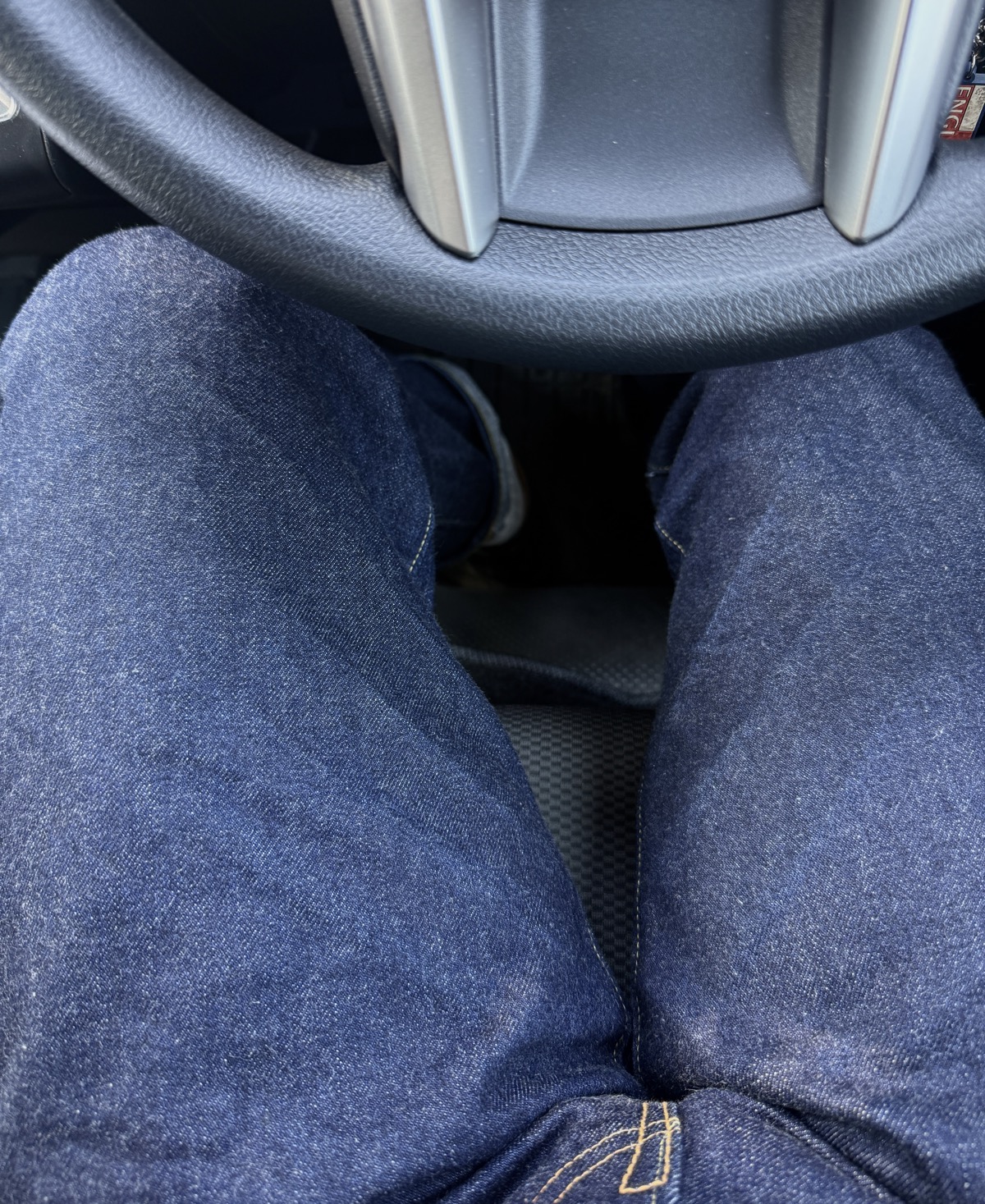

As I mentioned the other day, ”BONCOURA” is a brand created by Mr Morishima, a designer with a deep knowledge of vintage fashion.”
In this instalment, we’d like to give you a brief overview of the two models we’ve selected, as well as Mr Morishima’s extraordinary attention to detail in his craftsmanship.
First of all, take a look at this


Based on the Levi’s 66 model (circa the 1970s), the ”66” features a relatively slim fit with a gentle taper from the thigh to the hem.”
Size: 26 inches to 34 inches
¥30,000 plus tax
Next,


The so-called Levi’s 501: a masculine pair of jeans with a wide, straight silhouette. The ”XX” features vintage denim details throughout, such as V-stitching, hidden rivets, punched rivets and crotch stitching without gusset reinforcement.”
Size: 26 inches to 34 inches
¥30,000 plus tax
Before a pair of jeans is finished,
It is produced through the following process: spinning (turning cotton into yarn) → dyeing → weaving (weaving the fabric) → sewing.
Mr Morishima was involved in the development of BONCOURA’s denim fabric right from the raw cotton blending stage; it took him around a year to produce over 100 fabric samples, resulting in a denim fabric that truly embodies his ideal.

The fabric is slightly thicker and sturdier than usual at 15oz – a weight said to have been produced for only a limited period within the LEVI’S XX range (where the standard weight is 12.5oz).
And above all, original Levi’s XX (1950s) deadstock (You don’t come across this very often these days!) When I compared it side by side with BONCOURA denim, I was amazed at how faithfully it reproduced the pilling and rough texture.


Furthermore, not only the front buttons, but even the leather patches and rivets are all BONCOURA originals, rather than off-the-shelf items.


We are also extremely particular about our sewing, adjusting the stitching method, thread colour, thread count and stitch spacing depending on the model and the area being sewn.
In today’s world, things are often overlooked because people think, ‘You won’t know unless you try, and even if you do, it won’t make much difference.’
In order to improve efficiency and reduce costs, many production methods involve using materials already in stock and making very few changes to the stitching.
I wonder just how much it actually costs to produce these jeans...
”This reflects Mr Morishima’s meticulous attention to detail, as he once said, ”I will not release anything onto the market unless I genuinely want it myself.’


”A well-worn pair of jeans becomes a part of you.”
Brand-new items gradually settle in, become more comfortable to wear, and develop their own unique character. There are parallels here with leather shoes.
Even the same pair of jeans can change this much depending on who wears them, how they’re washed and how often.
”Why not try turning this pair of jeans—packed with attention to detail in every aspect—into a truly unique, one-of-a-kind piece that’s all your own?
Both Type 2 models are available at all Union Works stores.
online shoppingYou can also purchase it from here.
In the next instalment, we’ll be showcasing photos of the items being worn, as well as some more detailed close-ups for each model.
Thank you very much.
Shinjuku Branch, Aoyama Branch Shin