
Reduces chafing at the ankle opening
Reduces chafing at the ankle opening
26 September 2023
I bought these shoes because they fitted perfectly when I tried them on.
After wearing them for a while, the top of the shoe rubs against the bottom of my ankle and hurts.
I feel a sharp pain around my Achilles tendon.
Everything else is spot on, though...
I’m sure you’ve all had experiences like this, haven’t you?
So, in this article, we’d like to share one solution to the problem of the top of the shoe digging into your foot.
I hope you find this useful.
These Hermès trainers.
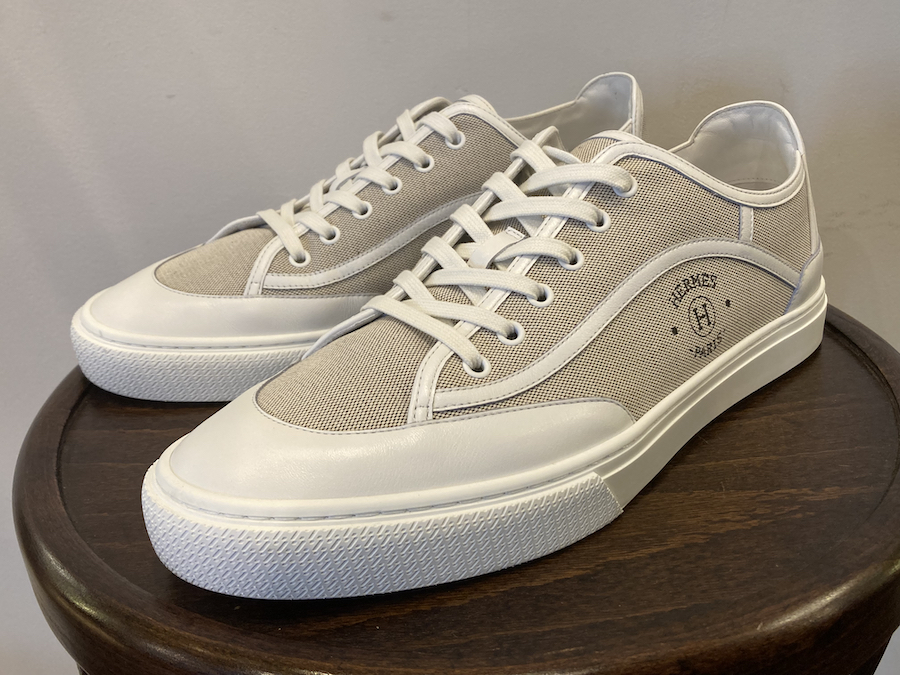
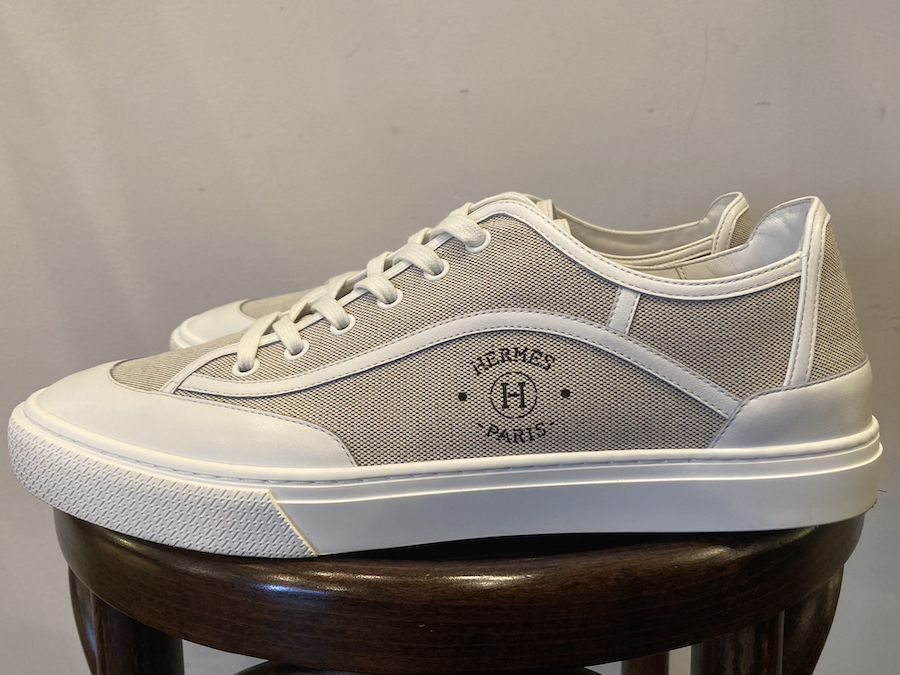
As you can see, the top of the shoe is quite high at the heel.
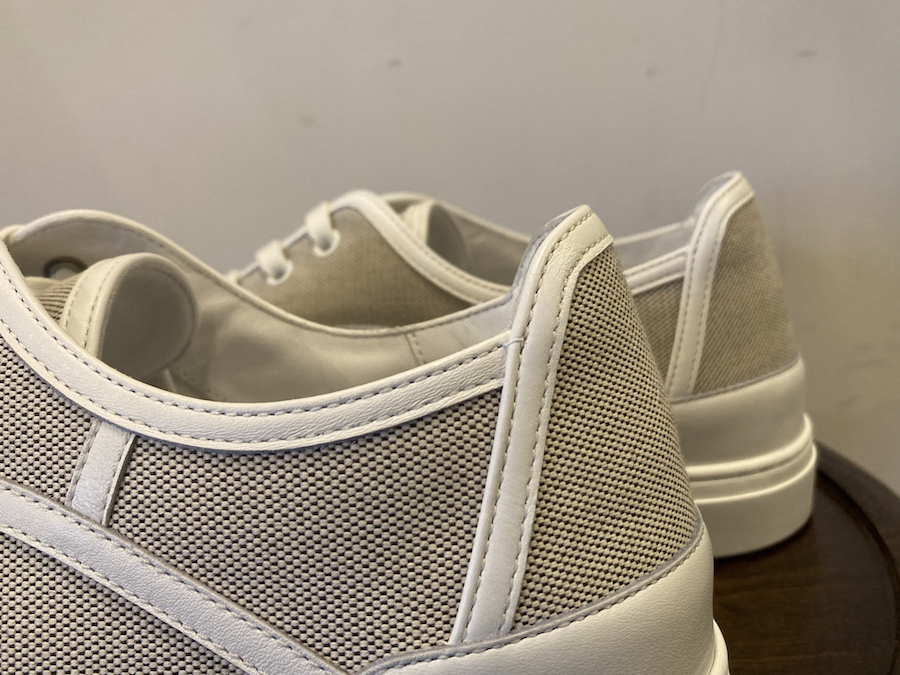
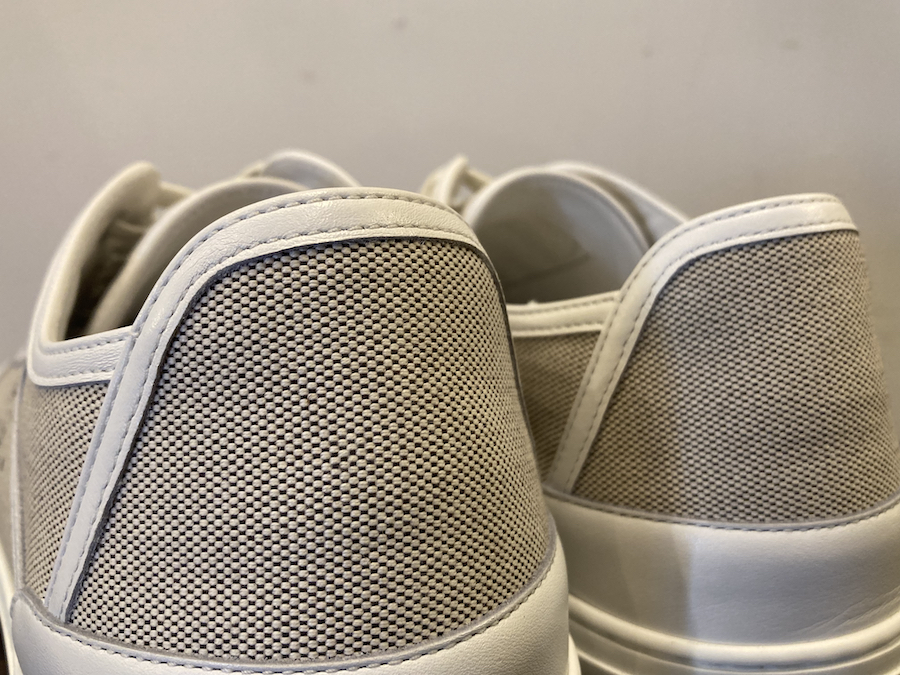
The heel cup, towering like the Arc de Triomphe.
The owner was, in fact, having problems with this very part.
My ankle’s fine, but,
This raised bit is digging into my Achilles tendon, making it so painful that I can’t walk.
The scab on my Achilles tendon was the clearest sign of the pain.
Thanks to its sturdy, reinforced construction, it’s rock-hard right up to the top of the boot.
Although it is meticulously crafted, in this instance that seems to be working against it.
To alleviate the impact even slightly, I’m going to try inserting an insole to raise the position of my heel.
Try the sample insoles on in-store to check their thickness.
As a result, it seemed that I would be able to walk without any problems if I used an insole about 15 mm thick.
15 mm is actually quite a considerable thickness, but,
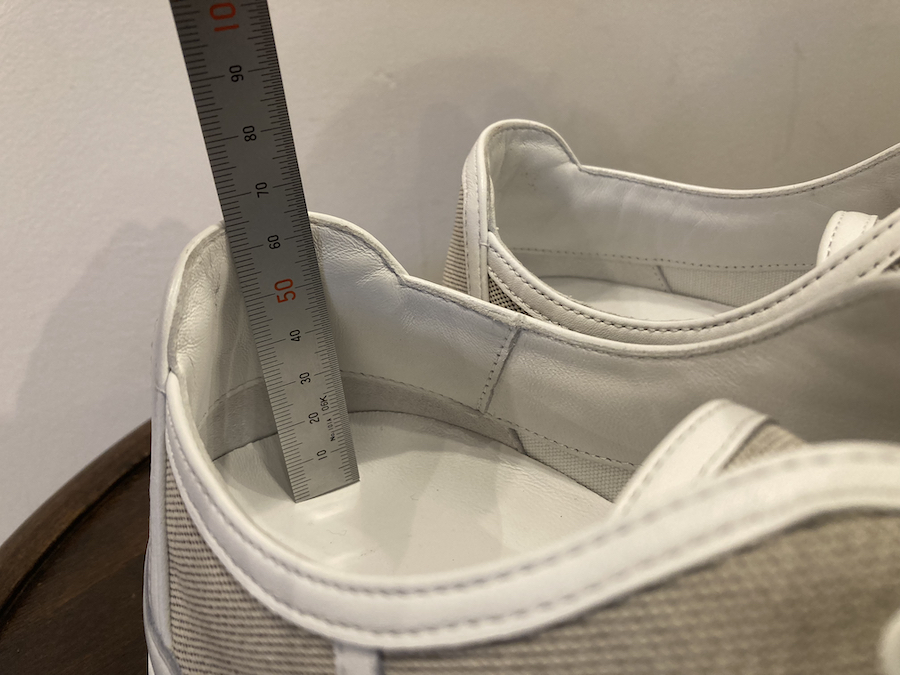
The height from the insole to the top of the shoe on the pair you brought in this time is approximately 80 mm.
The average height of men’s shoes, from the insole to the top of the shoe, is approximately 60 mm.
It looks as though adding 15 mm wouldn’t be a problem at all.
As there is a possibility that problems may arise, such as your feet sliding forwards when you wear them,
Generally speaking, it is best to ensure that insoles designed for size adjustment do not create too much of a difference between the front and back of the shoe.
The aim of this particular case is simply to alleviate pressure at the top of the shoe.
The front of the shoes already fits perfectly, and,
As there is no space at the front to insert an insole, we will make an insole that covers only the area from the waist to the heel.
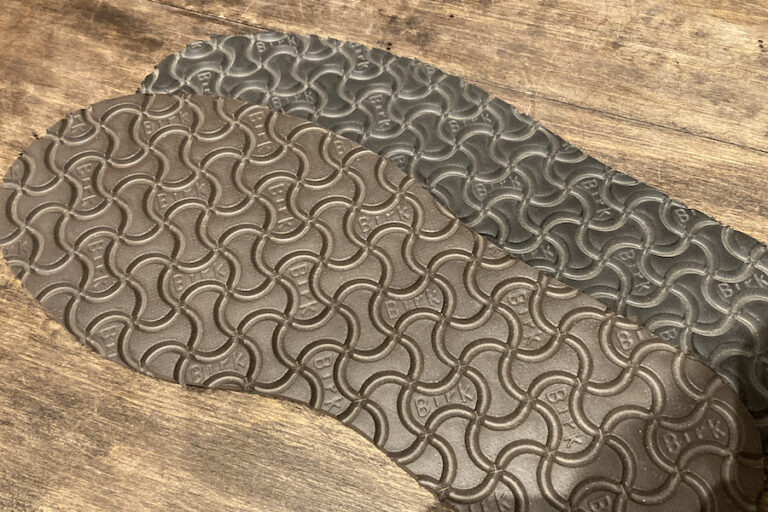
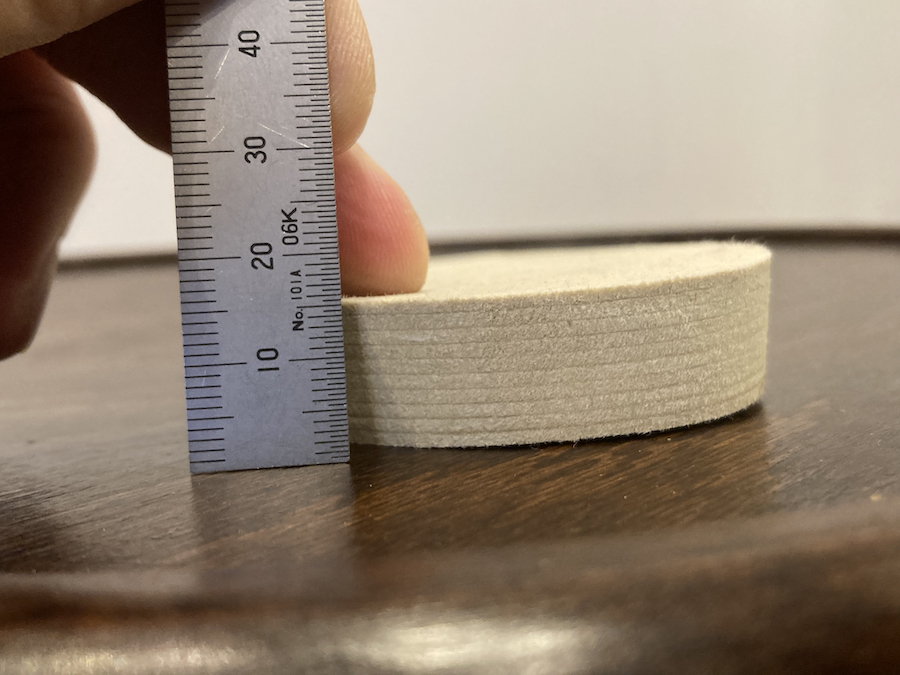
Stack the materials to a thickness of 15 millimetres.
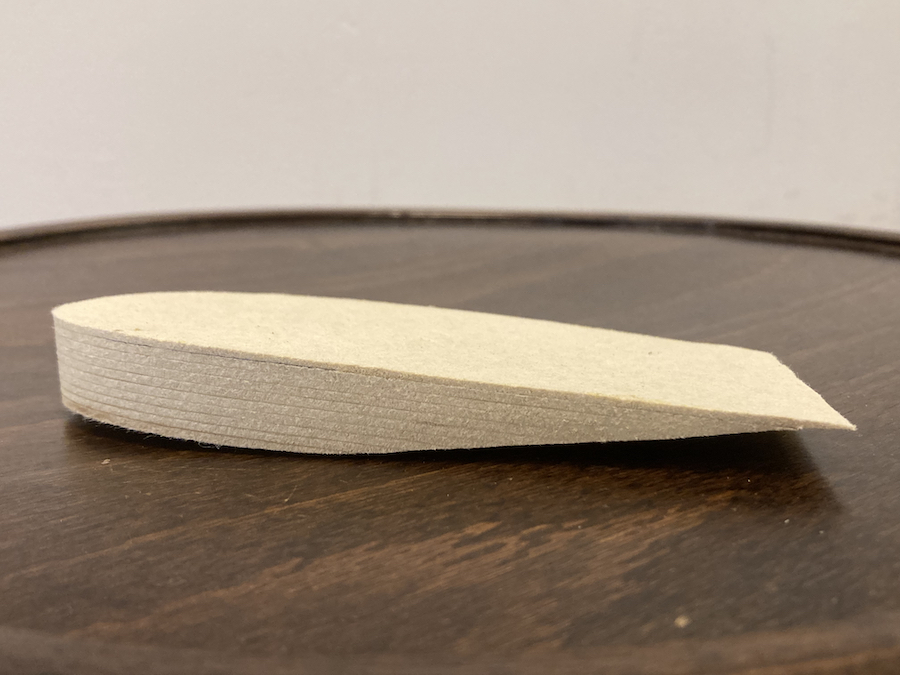
We taper it down towards the tip to create a slope, so as to minimise any discomfort on the sole of the foot.
Remove the original insole and insert the custom-made insole you have made.
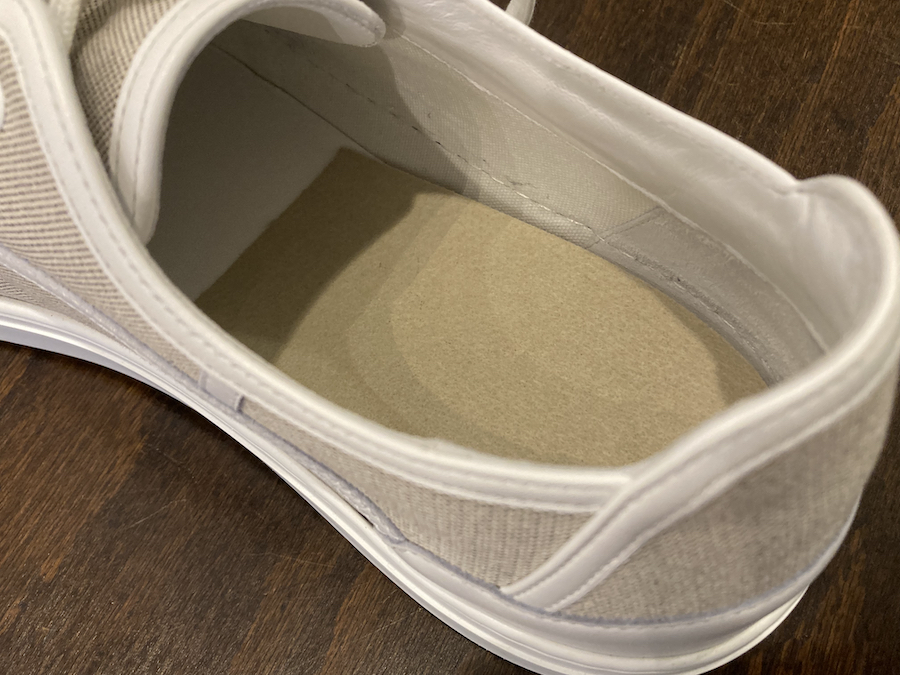
This is what it looks like with the insole back in place.
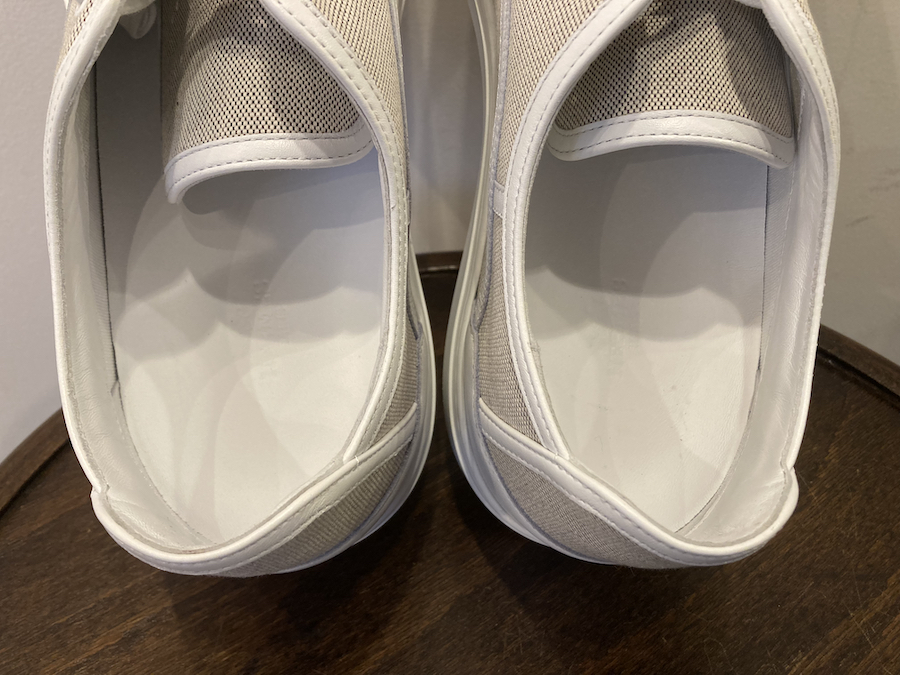
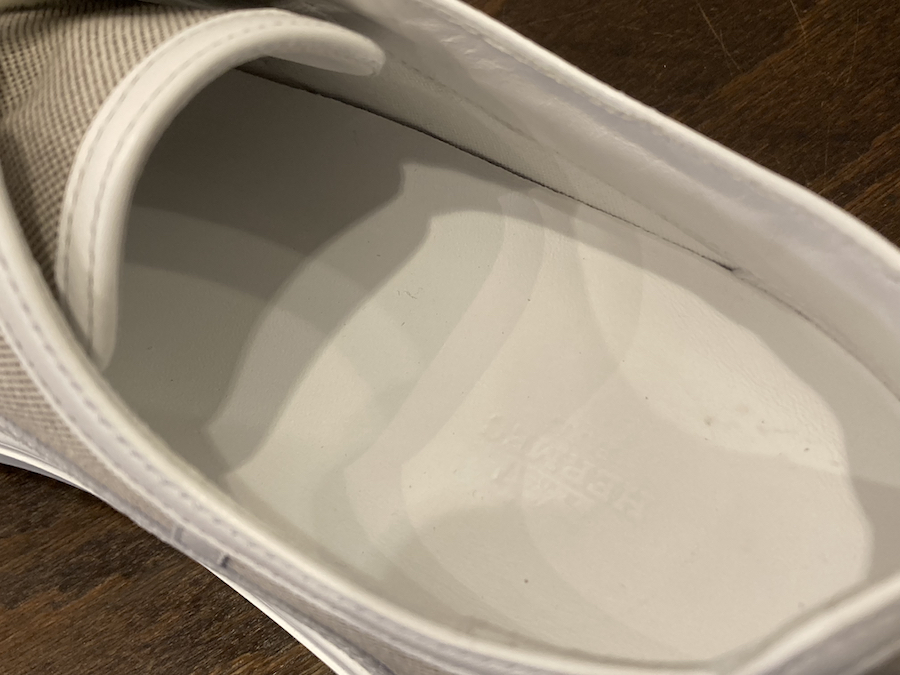
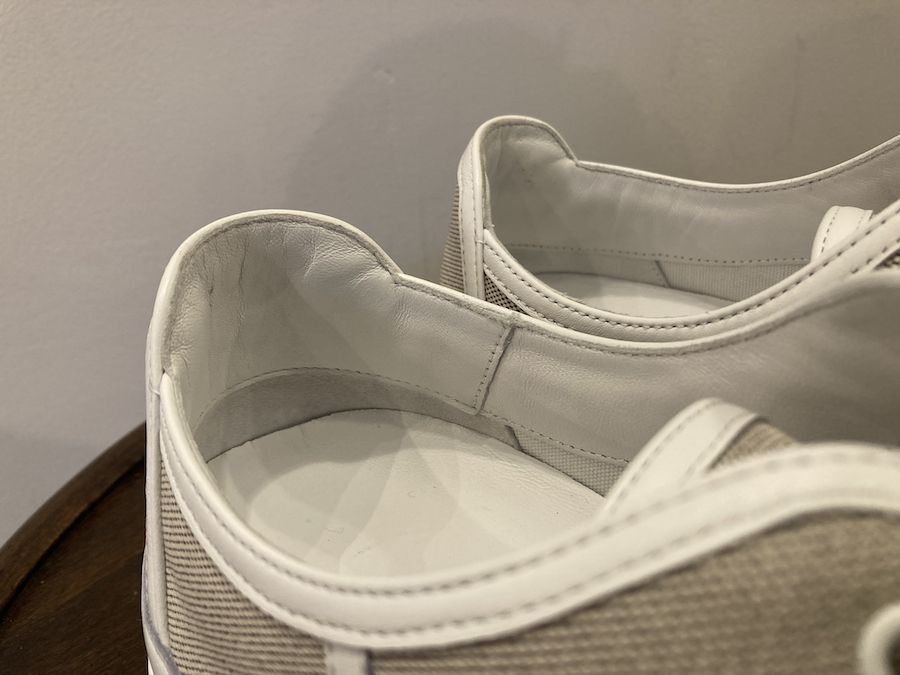
It doesn’t feel out of place, does it?
The heel cup is also a generous 65 mm high.
I imagine they’re now comfortable to wear, aren’t they?
I imagine there are many others facing similar problems.
Please do feel free to get in touch.
Thank you very much for staying with us until the end.
Aoyama Branch, Yokohama Branch, Yamada